Skip to content
Melbourne Roofers

Roof Plumbing Melbourne

Box gutters overflowing into the ceiling, a rusted valley, a chimney flashing that lets go every winter? Enquire here and we’ll organise a licensed roof plumber to find where the water is really getting in and quote the fix — gutters, downpipes, flashings and stormwater.

  • Box gutters, valley irons, flashings and downpipes
  • Licensed roof plumber organised · compliance discussed
  • Local Melbourne focus · free quote
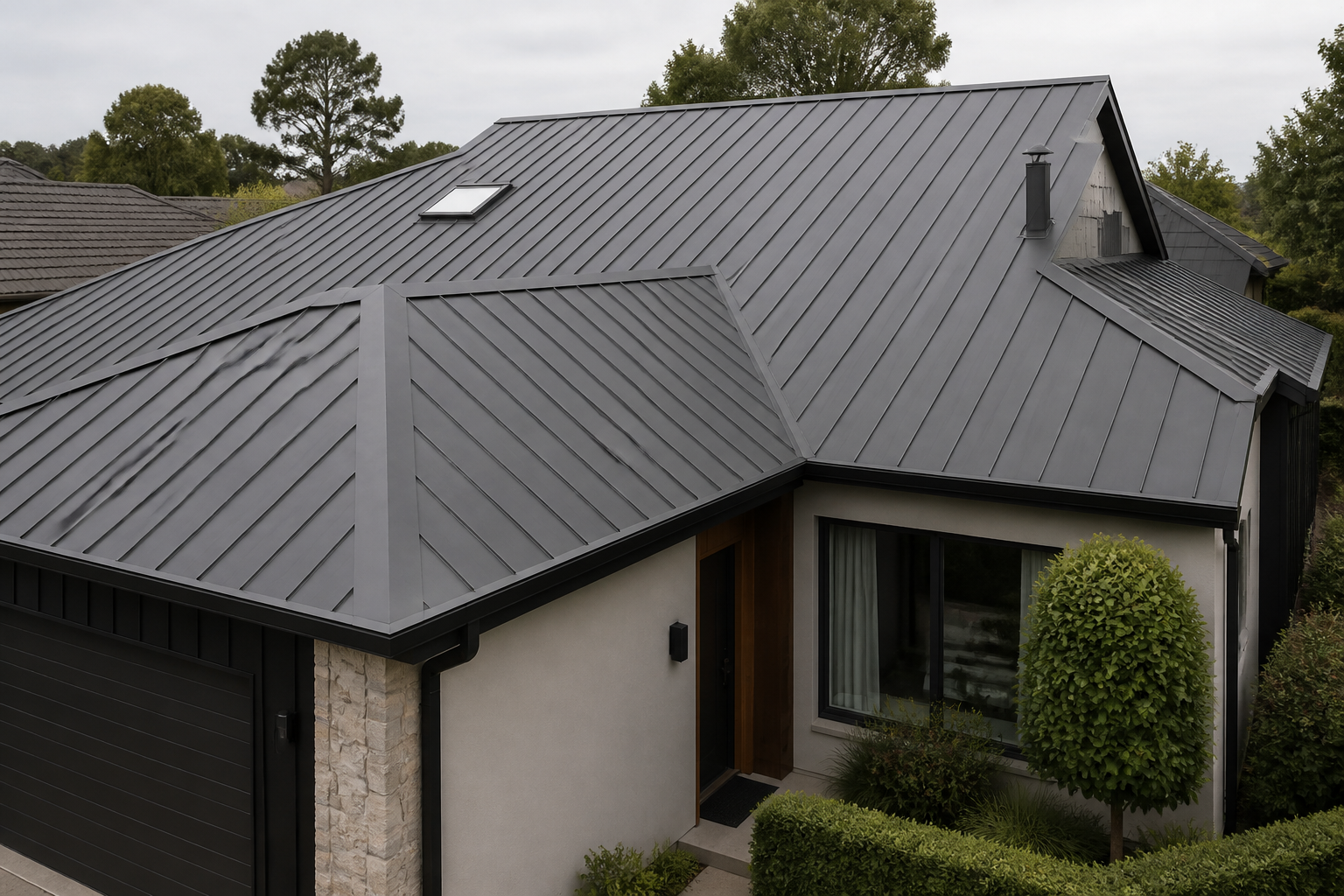
Roof plumbing on a Melbourne home — gutters, flashings and metal roof drainage

Roof plumbing quote

Tell us what’s going on — we’ll help get your roof sorted.

What happens next

  1. We review your suburb and job details.
  2. We organise the next step with our roofing partner.
  3. You’ll hear back to arrange an inspection or quote.

We aim to call back the same business day — usually within a few hours.

Free quote Melbourne suburbs Licensed roof plumber organised Compliance certificate discussed on scope

What roof plumbing covers on a Melbourne home

Roof plumbing Melbourne work is everything that moves water off and away from the roof: gutters and downpipes, box gutters and sumps, valley irons, apron and step flashings at chimneys, skylights and walls, rainheads, and the connection into stormwater. On metal roofs it also covers the sheets themselves — fixings, laps, ridge capping and penetrations.

That’s why so many “roof leaks” in Melbourne turn out to be roof plumbing problems. The tiles can be fine while a valley iron has rusted through, a back gutter behind the chimney has filled with leaf, or a box gutter outlet is too small for a summer downpour. Tell us where the water is showing and we’ll organise a licensed roof plumber to trace the path, not just patch the stain.

If the issue is clearly broken tiles, ridge pointing or general wear across a tiled roof, roof repairs Melbourne or roof restoration Melbourne may be the better fit. If you’re not sure which you need, say so — the inspection should give one clear answer.

Roof plumber vs roof tiler — who do you actually need?

Searching roof plumber Melbourne usually means water is getting in somewhere metal meets the roof. Rough guide: if the problem is in a gutter, downpipe, valley, flashing, box gutter or a Colorbond® / metal sheet, it’s roof plumbing. If it’s cracked or slipped tiles, crumbling ridge bedding or porous old concrete tile, it’s tiling work.

Plenty of Melbourne jobs need both — a rusted valley with cracked tiles either side, or a re-flashed chimney that also needs the surrounding tiles re-seated. Rather than you coordinating two trades, enquire once and we’ll organise the scope so the right work happens in the right order.

Box gutters and parapets — Melbourne’s terrace leak hotspot

Inner-north and inner-west terraces, Victorian and Edwardian semis, and plenty of 1990s–2000s townhouses rely on box gutters hidden behind parapets or between roof sections. When a normal eaves gutter overflows, water spills outside. When a box gutter overflows, it goes straight into the ceiling or down the inside of a wall.

The usual Melbourne culprits are an outlet that’s too small for the roof area feeding it, no proper overflow, rust at soldered joins on older galvanised liners, and a liner laid with too little fall so water sits. Clearing leaf buys a season. The lasting fix is usually a new liner sized for the catchment with a rainhead or overflow that sends excess water outside the building. Photos of the parapet, the sump and any ceiling staining help scope this quickly.

Flashings, valley irons and roof penetrations

Melbourne’s swing from hot dry spells to cold, wind-driven rain is hard on flashings. Sealant shrinks, lead and metal aprons lift, and the screws holding flashings to metal roofs back out on west-facing pitches. Valley irons on older tiled roofs are often the original galvanised steel — once rust breaks through, every heavy shower finds the hole.

Typical fixes are remaking or replacing chimney and wall flashings, replacing valley irons with Colorbond® or Zincalume® sections, and resealing or re-booting vent pipes, flues and skylight surrounds. Sealant alone is a short-term patch; a remade flashing is the proper repair. If a skylight is part of the leak story, our guide to a skylight on a metal roof covers what good detailing looks like.

Licensing and compliance — what to ask in Victoria

Roof plumbing is a licensed plumbing class in Victoria. Gutters, downpipes, box gutters, flashings and stormwater connections should be done by a licensed or registered roof plumber, and larger jobs should come with a plumbing compliance certificate. That paperwork matters for insurance claims, warranties and when you sell.

A simple checklist for any quote: ask for the plumber’s licence details, whether a compliance certificate will be issued, what materials and profiles are being used, and how the job is staged if rain arrives. This is general guidance, not legal advice — the scope conversation is where specifics for your home get confirmed.

Storm-season overflow — sizing for Melbourne downpours

Melbourne doesn’t get tropical rain often, but it does get short, heavy bursts — summer thunderstorms and spring fronts that drop a lot of water in minutes. Gutters and downpipes sized decades ago, or extensions that added roof area without adding downpipes, often can’t keep up. The result is overflow at the same corner every storm, staining on fascias, or water pooling against the slab.

Fixes range from adding a downpipe or rainhead, to upgrading to a larger gutter profile, to clearing or relaying a collapsed underground stormwater line. If the gutters are simply full of leaf, start with gutter cleaning Melbourne. If they’re rusted, sagging or undersized, gutter replacement Melbourne is the next step.

Roof plumbing cost in Melbourne — what moves the price

We don’t publish “from $X” roof plumbing prices, because the honest answer depends on the job. The big drivers are access (single vs double storey, steep pitch, tight terrace sites), how much needs replacing (a single flashing vs a full box gutter re-line), material and profile, and whether hidden rust or stormwater damage turns up once work starts.

A small flashing reseal or downpipe fix is a very different spend from re-lining a terrace box gutter or re-guttering a two-storey home. Get one clear scope after inspection, then decide. Call 0485 008 178 with your suburb, roof type and where the water is showing. We aim to call back the same business day — usually within a few hours.

What to include in your enquiry

  • Suburb, storeys and whether the roof is tile or metal
  • Where water shows — ceiling, wall, overflowing gutter, pooling at a downpipe
  • Whether you have box gutters, parapets or a chimney
  • Photos from the ground (and roof space if safe)

Related services & guides

Suburb roofing pages

Free quote. Enquire once and we organise a licensed roof plumber with our roofing partner. No quote-shopping race, no chasing three trades yourself.

What Melbourne roof plumbing jobs usually cover

Gutters, box gutters & downpipes

Re-lining box gutters, replacing rusted or sagging runs, adding downpipes or rainheads where overflow keeps happening.

Flashings & valleys

Chimney, wall and skylight flashings remade; rusted valley irons replaced; vent pipes and flues re-booted.

Stormwater & metal sheets

Downpipe-to-stormwater connections checked, plus fixings, laps and ridge capping on Colorbond® and metal roofs.

Melbourne home types that need roof plumbers most

Roof plumbing problems cluster around how the house was built, not just how old it is. Matching the fix to the home type stops you paying for a full re-gutter when a valley iron or rainhead would have done the job — and stops a cheap patch on a terrace box gutter that was always going to overflow into the bedroom.

  • Victorian and Edwardian terraces in Fitzroy, Carlton, Richmond, South Melbourne, Footscray and similar streets usually hide box gutters behind parapets, with rainheads and round downpipes discharging to the laneway or front. When the liner rusts, the outlet is undersized, or there is no external overflow, every heavy shower soaks the ceiling. Like-for-like re-lining with a proper overflow is the lasting fix; cleaning alone buys a season.
  • Interwar Californian bungalows across Coburg, Brunswick West, Malvern East, Bentleigh and Essendon spread a lot of water across a wide, low-pitched terracotta roof into relatively few valleys and gutters. Downpipe count and valley condition often matter more than the tiles themselves.
  • Post-war weatherboard and cream-brick homes from the 1950s–60s in Reservoir, Preston, Sunshine and Box Hill commonly still run ageing galvanised gutters on timber fascias that have soaked up years of overflow. Rust at joins and soft fascia boards travel together.
  • 1970s–90s brick veneer through Wantirna, Rowville, Mulgrave and Frankston mostly carries quad gutters and galvanised or early Colorbond® valleys reaching the end of their first life, with rust starting under leaf near the valleys.
  • 2000s-onward estate homes in Point Cook, Tarneit, Craigieburn, Mernda and Cranbourne often use square-line or fascia-integrated gutters. Issues here are more often fall, outlet placement and overflow detailing than raw age.
  • Mid-century skillion, butterfly and flat roofs frequently hide concealed gutters that are a design and overflow question, not a simple eaves swap.

Valley irons, apron flashings and penetration boots — failure modes in Melbourne weather

Melbourne swings from hot, dry northerlies to cold, wind-driven rain. Sealant shrinks and cracks. Lead and metal apron flashings lift at chimneys and wall abutments. Screws on west-facing metal pitches back out as sheets expand and contract. Valley irons on older tiled roofs are often still the original galvanised steel; once rust breaks through, every downpour finds the hole, especially where plane-tree or gum litter sits wet in the valley for months.

Penetration boots around vent pipes, flues and some skylight kerbs harden and split with UV. A silicone smear over a failed boot is a short-term patch; a remade flashing or a correctly sized boot is the longer repair. Chimney back gutters fill with leaf and then overflow behind the stack into the roof space — a classic “mystery leak” on Federation and interwar homes in the inner north and east. If tiles around the metal are also cracked or slipped, the scope should say so rather than only replacing the iron.

Overflow design for short, intense Melbourne storms

We do not get tropical wet seasons, but summer thunderstorms and spring fronts can drop a large volume of water in minutes. Gutters and downpipes sized for an older, smaller roof — or left unchanged after a rear extension added catchment — often cannot keep up. On eaves gutters the failure mode is overflow at one corner, stained fascias, or water running behind a fascia-integrated gutter into the eaves lining. On box gutters the failure mode is water into the house.

Good overflow design is what turns that rare burst into a nuisance outside rather than a ceiling repair. Rainheads with a visible overflow outlet, sumps that can take a surge, eaves gutters set so excess spills outward, and enough downpipes for the roof area are the usual toolkit. If a gutter is simply full of leaf, start with gutter cleaning Melbourne. If the profile is rusted, sagging or clearly undersized, gutter replacement Melbourne is the next conversation. Ask specifically how overflow will work on your house, not just which colour of gutter you get.

Licensing, compliance certificates and the public register

In Victoria, installing or replacing gutters, downpipes, box gutters, many flashings and stormwater connections is regulated roofing (stormwater) plumbing work. It should be done by a registered or licensed plumber in that class. Where the total value of the work is $750 or more, including labour and materials, a licensed plumber is required to issue a compliance certificate within five days of finishing.

Keep that certificate with your house records. It helps if a defect turns up later, and buyers, owners corporations and insurers may ask about it. You can check a practitioner’s registration or licence on the public register run by the state building and plumbing regulator. When you enquire here, ask for the certificate to be included in the scope so the paperwork is part of the job rather than something you chase afterwards. This is general guidance, not legal advice — confirm specifics for your job at quote time.

Rainwater tanks, solar panels and air-conditioning penetrations

Roof plumbing rarely happens on a bare roof edge. Rainwater tanks, first-flush diverters and leaf diverters plumbed into downpipes need to be disconnected and reconnected properly; a tank connection is part of the regulated roof drainage, so it should not be left as a hose for you to sort out later. Solar arrays close to the eaves limit ladder access and add rail penetrations that must stay watertight. Roof-mounted air-conditioning, antenna brackets, security cameras and garden lighting along the fascia all slow the job if nobody knew about them in advance.

A short list or a few photos on the enquiry saves surprises on the day and keeps the quote honest. If a leak started after solar or AC was installed, say so — the penetration or the adjacent flashing is often the real path, not the tiles three metres away.

Emergency vs planned work after storms

After a severe storm the priority is stopping active water entry: temporary covers, clearing a blocked box-gutter outlet, or making a lifted flashing safe until a lasting repair can be booked. That is different from a planned re-line, re-gutter or full flashing remake, which needs dry access, materials on hand and often a compliance certificate at the end. If ceilings are dripping now, say it is urgent on the enquiry so it is triaged as a repair attendance rather than a routine quote visit.

For insurance, take your own dated photos before anything is moved, keep any temporary-repair invoice, and ask your insurer what format of report they need. Whether sudden storm damage is covered is your insurer’s decision under your policy, not ours. A written scope with photos after inspection is what you can pass on.

Questions worth asking before you go ahead

  • Is this a valley, flashing, box gutter, eaves gutter or stormwater problem — or more than one?
  • How will overflow work if an outlet blocks in a summer storm?
  • Will I receive a compliance certificate for work over $750?
  • How will my rainwater tank, solar array or AC unit be handled?
  • What is temporary emergency work versus the lasting fix, and how are they staged?

Include your suburb, storeys, tile or metal, where water shows, and whether you have box gutters, a chimney or a parapet. Call 0485 008 178 or use the form above.

What we organise for Melbourne roof plumbing

Illustrative job types, not staged before/after photos. Real roof plumbing scopes start from your suburb, roof type and where water is showing. Enquire here and we’ll organise a licensed roof plumber with our roofing partner.

Illustrative example — Melbourne box gutter roof plumbing job type (not a completed job photo) Example job type

Terrace box gutter overflowing into the ceiling

Before
Inner-north terrace with a galvanised box gutter behind the parapet — small outlet, no overflow, ceiling stain after every summer storm.
After / organised outcome
Box gutter re-lined with a larger sump and a rainhead overflow that discharges outside, so the next downpour spills to the street side, not the hallway.
Illustrative example — valley iron replacement roof plumbing job type Example job type

Rusted valley iron on an older tiled roof

Before
Original galvanised valley on a 1960s east-suburban concrete-tile roof — rust holes letting water track down the ceiling below the valley.
After / organised outcome
Valley iron replaced with a Colorbond® or Zincalume® section, adjoining tiles re-seated, and a rain recheck planned rather than a sealant patch.
Illustrative example — chimney flashing roof plumbing job type on a Melbourne home Example job type

Chimney back gutter and flashing letting go

Before
Bayside brick chimney with lifted lead apron and a leaf-choked back gutter — damp patch on the chimney breast every winter front.
After / organised outcome
Flashings remade, back gutter cleared and re-formed, and an honest note if the chimney pointing itself needs separate work.

Suburb callouts — roof plumbing

  • Northcote — Parapets and hidden box gutters on Victorian and Edwardian stock — overflow goes inside, not over the edge.
  • Brunswick — Terraces and warehouse conversions with long box gutter runs and tight access.
  • Brighton — Salt air on flashings and fixings — corrosion class matters even on a small roof plumbing fix.
  • Oakleigh — Unit blocks and shared downpipes — owners corp approval can shape the scope.
  • Box Hill — Older concrete-tile homes with original galvanised valleys reaching end of life.
  • Point Cook — Newer estates where extensions or alfresco roofs added catchment without adding downpipes.

Melbourne climate notes for roof plumbing

  • Short, heavy summer downpours test outlet and downpipe sizing more than steady winter rain does.
  • Hot-dry spells shrink sealant and lift flashings; the next cold front finds every gap.
  • Salt air around the bay shortens the life of some coatings and fasteners — steel grade and fixings should be matched to the site.
  • Autumn leaf drop in the leafy east fills box gutters and chimney back gutters fast — they need checking, not just the eaves.

Cards and images above are illustrative roof plumbing job types for Melbourne suburbs — not photographs of completed Melbourne Roofers jobs. Licence, compliance certificate and warranty are discussed at scoping.

Frequently asked questions

What does a roof plumber do that a roof tiler doesn’t? ▾

A roof plumber works on the metal and drainage side of the roof: gutters, downpipes, box gutters, valley irons, flashings around chimneys and skylights, rainheads and the connection down to stormwater, plus metal sheet roofing. A roof tiler rebeds, repoints and replaces tiles. Plenty of Melbourne leaks sit right on the boundary — a cracked tile next to a rusted valley — so tell us what you can see and we’ll organise the right trade for the job.

Does roof plumbing in Victoria need a licensed plumber? ▾

Yes. Roof plumbing (roofing, gutters, downpipes and stormwater) is a regulated plumbing class in Victoria, so the work should be done by a licensed or registered roof plumber, and larger jobs should come with a plumbing compliance certificate. Ask for licence details and the certificate at quote time — it matters for insurance and when you sell. This is general guidance, not legal advice.

Why does my box gutter leak into the ceiling every heavy storm? ▾

Box gutters sit inside the roof line, so when they overflow the water goes into the house rather than over the edge. Common causes on Melbourne terraces and townhouses are an undersized outlet, a missing or blocked overflow, rust holes at joins, and too little fall toward the sump. Cleaning helps for a season; the lasting fix is usually re-lining or replacing the box gutter with a proper overflow. Photos of the ceiling stain and the gutter help with triage.

Can a roof plumber fix a leak around my chimney or skylight? ▾

Usually, yes. Leaks at chimneys, skylights, vent pipes and wall junctions are mostly flashing problems — lifted lead or metal apron flashings, failed sealant, or a back gutter that has rusted behind the chimney. Resealing can be a stopgap; remaking the flashing is the longer fix. If the tiles or sheets around it are also failing, the inspection should say so rather than just patching.

How do I know if my downpipes are the problem? ▾

Signs include gutters that overflow at one corner while the rest are fine, water pooling at the base of a downpipe, wet patches against the house slab, or gurgling and backing up during heavy rain. A blocked or collapsed underground stormwater line can look like a gutter problem from below. Mention where water collects on your enquiry and whether the issue started after a renovation or new paving.

Is roof plumbing work covered if a storm caused the damage? ▾

That depends on your insurer and policy, not on us. Many policies treat sudden storm damage differently from long-term rust or wear. Take dated photos before anything is moved, keep any temporary-repair invoice, and ask your insurer what report they need. We can organise an inspection and written scope that you can pass on.

Which Melbourne home types need roof plumbing attention most often? ▾

Terraces and townhouses with parapet box gutters, wide interwar bungalows with long valley runs, post-war homes with ageing galvanised gutters and timber fascias, and mid-century or estate homes with concealed or fascia-integrated gutters are the usual callers. The common thread is water sitting in metal drainage — valleys, aprons, box gutters or undersized outlets — rather than failed tiles alone. Photos of where water shows and whether you have a parapet or chimney help triage the right scope.

Why do short Melbourne storms overflow gutters that seem fine the rest of the year? ▾

Summer thunderstorms and spring fronts can dump a lot of water in minutes. Gutters and downpipes sized decades ago, or roofs extended without extra outlets, cannot always keep up. Box gutters without a rainhead or external overflow send that excess into the ceiling instead of outside. Overflow design — rainheads, sumps, slotted eaves gutters, a front edge set to spill outward — is what turns a rare downpour into a nuisance rather than a soaked plasterboard job.

How do rainwater tanks, solar panels and air-con units affect roof plumbing? ▾

Tank connections are part of the regulated roof drainage, so disconnecting and reconnecting them properly should be in the scope, not left as a loose pipe. Solar rails and AC condensers limit access along eaves and create extra penetrations that need sound boots and flashings. Mention tanks, panels, flues and roof-mounted plant on the enquiry so the quote covers access and reconnection rather than surprising you on the day.

What should I send when I enquire about roof plumbing? ▾

Your suburb, whether the roof is tile or metal, single or double storey, and where the water is showing — overflowing gutters, ceiling stains, a rusty valley, a dripping downpipe. Photos from the ground and from inside the roof space, if it’s safe, are gold. Call 0485 008 178 or use the form and we’ll organise a licensed roof plumber to inspect and quote.

Call 0485 008 178