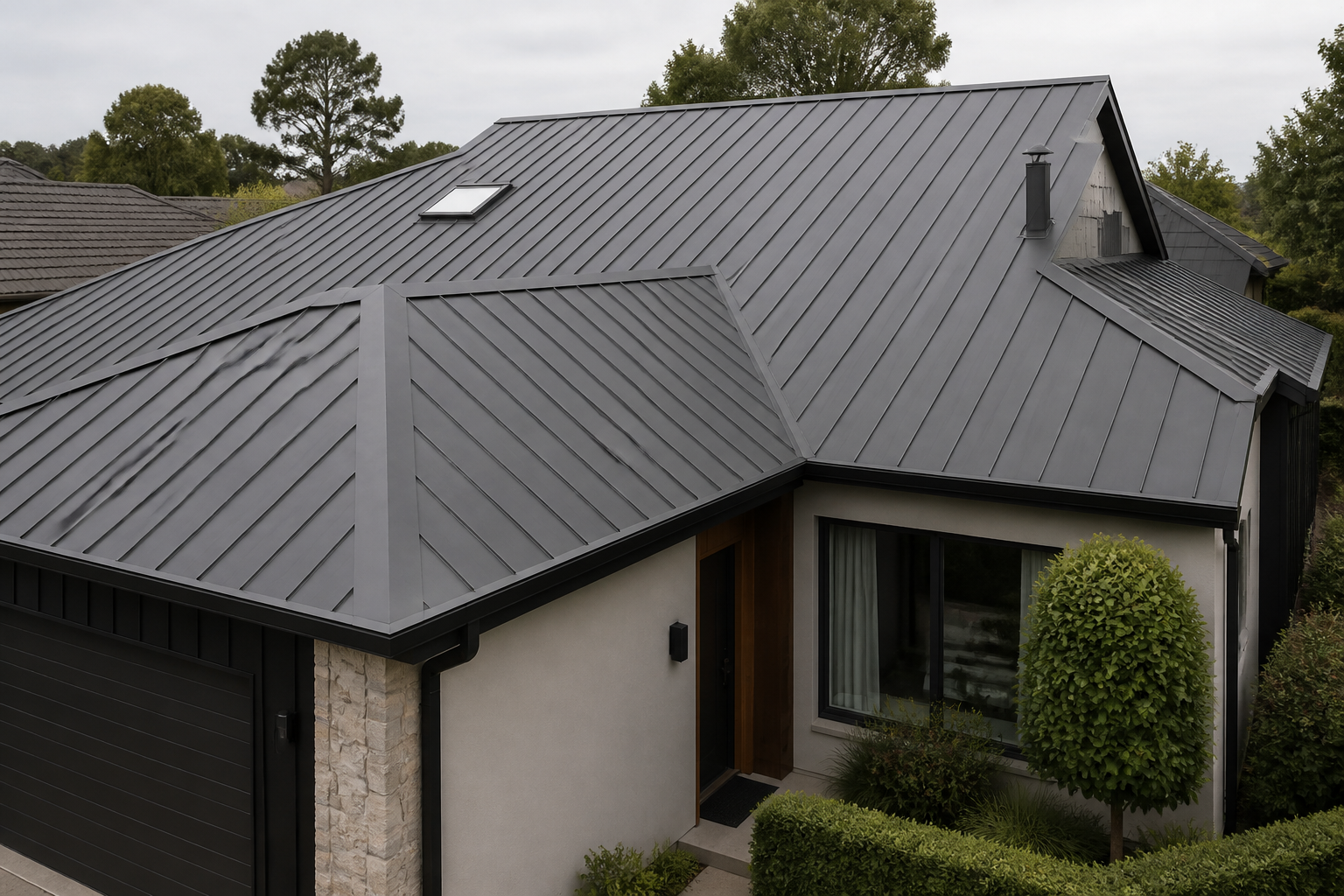
Leaking roof or roof leak? Start here
This is the one page for roof repair, leaking roof and roof leak intent across Melbourne — we don’t split those into separate URLs. Damp ceilings, water trails after rain, daylight through tiles, or lifting flashings are signals to act. Melbourne’s mix of hot summers and sharp storms is hard on older tiled roofs — ridge capping loosens, valley irons fatigue, and small gaps become indoor drips the next time a front comes through.
Temporary tarping can limit damage, but lasting roof repairs Melbourne need the water path diagnosed — not just the stain painted over. A proper look at the roof from above (and sometimes from the ceiling space) settles whether you’re dealing with one failed flashing, a run of cracked concrete or terracotta tiles, or a wider drainage problem that starts in the gutters.
If water is actively entering, say so when you enquire. Urgent leak help can be organised when needed. Hours are Mon–Fri 9–6 and Sat 9:30–5; urgency is about triage, not pretending the phone is staffed at 3am every night.
Roof repair cost — how much to repair a roof in Melbourne?
Searching roof repair cost Melbourne (or “how much to repair a roof”) usually returns wide ranges — and that’s honest. The short answer: a localised tile or flashing fix often sits in the low-to-mid hundreds through to low thousands; multi-area leak paths, two-storey access or storm damage climb from there. Emergency attendance after a storm may carry different labour windows than a booked weekday repair. We don’t publish fake “from $X guaranteed” prices — the inspection settles the number for your home.
Typical repair scopes we organise
- Tile replacement, pointing and rebedding on aged terracotta or concrete roofs
- Valley iron, apron and chimney flashings that have opened or rusted through
- Metal sheet screw resealing, sheet replacements and ridge capping on Colorbond®-style roofs
- Skylight and pipe penetrations that have opened up over summers and storms
- Storm damage — lifted tiles, debris impact, and follow-up after severe weather
Common Melbourne roof repair issues
Broken or slipped tiles are the classic suburban call. Concrete and terracotta tiles crack under foot traffic, tree limbs, or simple age. One missing tile can channel water onto sarking or battens; a run of failed tiles along a valley is a different job again.
Failed flashings around chimneys, abutments and skylights are another frequent culprit. Lead and metal flashings work hard through Melbourne’s temperature swings. When they lift or crack, water follows the wall line into rooms that look nowhere near the roof pitch.
Ridge capping and pointing fail gradually. Mortar shrinks and washes out; caps rock in high wind; water tracks under the ridge and shows up as a mysterious ceiling spot well away from the ridge line.
Metal roof repairs tend to involve fasteners, laps and sealants. Screws back out, washers perish, and old silicone fails. If the metal covering is at end of life, a roof replacement Melbourne or metal roofing Melbourne conversation (including Colorbond®) may be the cleaner spend.
Tracing a roof leak in Melbourne: where water gets in vs where it shows
The stain on the ceiling is rarely sitting directly under the hole. Water lands on sarking, a batten or the top of a ceiling joist and runs downhill until it finds a low point, so a drip in the hallway can start two metres upslope at a valley or a chimney. That’s why a good roof leak repair starts with the leak path, not the patch. Useful clues to note before anyone gets on the roof:
- Which rain sets it off. Leaks that only appear in a hard westerly or a southerly change usually point to wind-driven water under ridge caps, flashings or tile laps. Leaks that show in any steady rain lean toward a cracked tile, a split valley or an open penetration.
- How fast it appears. A drip within minutes of rain starting suggests a direct entry point. A stain that grows a day later often means water tracking along timber, or a gutter or box gutter backing up once it fills.
- What sits above the stain. Valleys, chimneys, skylights, solar mounts, vent pipes, evaporative cooler ducts and the line where an extension roof meets the original house are the usual suspects on Melbourne homes.
- The ceiling space. If it’s safe to look through the manhole with a torch, wet timber, tide marks on sarking or daylight through tiles narrow the search a lot. Don’t step off the joists.
Mention these when you enquire. They let the inspection go straight to the likely entry point and cut down the chance of fixing the wrong thing.
Leaking roof patterns by Melbourne housing era
Melbourne’s suburbs were built in waves, and each wave leaks in its own way. Knowing roughly when your home was built helps predict what the repair will involve.
Victorian and Edwardian terraces and villas
Inner-ring streets in Carlton, Fitzroy, Richmond, South Melbourne, Northcote and Williamstown carry slate or corrugated iron behind parapets, with box gutters and rainheads doing all the drainage. When a box gutter overflows, water goes straight inside rather than over an eave. Leaks here are often a roof plumbing job (box gutter relining, sumps, overflows) as much as a roof job, and slipped slates belong with slate roofing repairs using matched slate.
Interwar bungalows with terracotta tiles
Brunswick, Coburg, Camberwell, Malvern and Brighton have plenty of 1920s–40s Marseille-pattern terracotta. The tiles themselves often outlast the bedding: ridge mortar cracks, caps rock loose, and water gets under the ridge in wind. Unsarked roofs from this era have no second line of defence, so a single slipped tile can mean a wet ceiling. Ridge rebedding and repointing, plus swapping cracked tiles for salvaged matches, covers most of these jobs.
Post-war concrete tile homes
The 1950s–70s brick veneers across Bentleigh, Moorabbin, Oakleigh, Sunshine, Preston and Box Hill usually have early concrete tiles. After sixty-plus years the surface has worn, tiles absorb more water, and valleys collect leaf from mature street trees. Leaks commonly come from rusted valley irons, blocked valleys overflowing sideways under the tiles, and old lead flashings at chimneys. If the leaks keep moving around the roof, the honest answer may be restoration or replacement rather than another round of patches.
1980s to 2000s estates and extensions
Growth-corridor homes in Narre Warren, Berwick, Point Cook, Werribee and Epping are younger, so leaks are more often about detail than age: valleys too short or poorly turned up, a pergola or alfresco roof tied in at a shallow pitch, a later second-storey addition with a flashing that was never quite right, or solar panels fixed through tiles that cracked on install. These are usually targeted, cost-effective repairs once the exact junction is found.
Modern metal skillion and low-pitch roofs
Newer Colorbond® skillion and low-pitch roofs rely on correct fall, sealed laps and well-sized box gutters. Leaks tend to come from fasteners backing out, failed sealant at penetrations, sheets that stop short of the gutter, or box gutters without overflows. On metal, a winter “leak” can actually be condensation dripping off the underside of the sheet; the fix there is sarking or anticon blanket, covered on the metal roofing Melbourne page.
Leaks that aren’t really the roof
A fair share of “roof leak” calls turn out to start somewhere else. It’s worth ruling these out, because a roof repair won’t fix them:
- Overflowing gutters and downpipes. Blocked gutters push water back over the fascia and into eaves and wall cavities, which looks like a leak along the edge of a room. Gutter cleaning or gutter replacement is the fix if the gutters are undersized or have lost their fall.
- Condensation. Bathrooms vented into the roof space and unsarked metal roofs can drip in cold weather with no rain at all.
- Air conditioning and evaporative coolers. Blocked condensate lines, a cooler tray overflowing, or a cracked roof jack around the cooler duct can all wet a ceiling.
- Plumbing in the roof space. Hot water lines and vent pipes sometimes leak inside the roof rather than through it. If the stain appears on dry days, mention it.
- Wall and window junctions. On double-storey homes, water can enter at an upper-storey wall or window head and show on the ceiling below, nowhere near a roof surface.
Temporary fixes vs lasting roof repairs
A tarp after a storm is a sensible stopgap, done by someone set up for height work. What causes trouble is the temporary fix that becomes permanent: silicone smeared over a cracked tile, roof cement packed into a valley, or a tube of sealant around a chimney instead of new flashing. Sealant breaks down in Melbourne’s UV and summer heat, and roof cement in a valley can dam water and push it under the tiles beside it. A lasting repair replaces the failed part: a new valley iron, a remade apron or step flashing, a rebedded and pointed ridge, a matched tile, or new fasteners and washers on metal.
When you get a quote, it’s fair to ask what is being replaced and what is only being sealed, and whether a recheck after the next decent rain is part of the job.
Storm damage, the VICSES and insurance
If a storm has brought down a tree branch, opened a large section of roof, or made the house unsafe, the Victoria State Emergency Service (VICSES) handles storm emergencies on 132 500, and a life-threatening situation is always 000. Once the immediate danger is dealt with, a proper repair can be organised through this page.
For insurance, take dated photos of the roof (from the ground is fine), the ceiling, and any damaged contents, and keep broken tiles or flashing pieces if they come off. Insurers generally treat sudden storm damage differently from gradual wear and tear, but whether a particular leak is covered is the insurer’s decision under your policy, not ours. An inspection report with photos and a clear repair scope makes that conversation much easier.
How the repair process works
- Enquire — suburb, roof type, where the issue shows indoors, and whether water is active. Photos help.
- Triage — we review urgency and organise the next step with our roofing partner.
- Inspect — on-site look at access, materials, the leak path and related drainage.
- Quote — clear scope for the repair (and honest advice if restoration or replacement is the better spend).
- Repair & check — works completed, then a sensible recheck after the next decent rain where practical.
Prefer phone? Call 0485 008 178. We aim to call back the same business day — usually within a few hours.

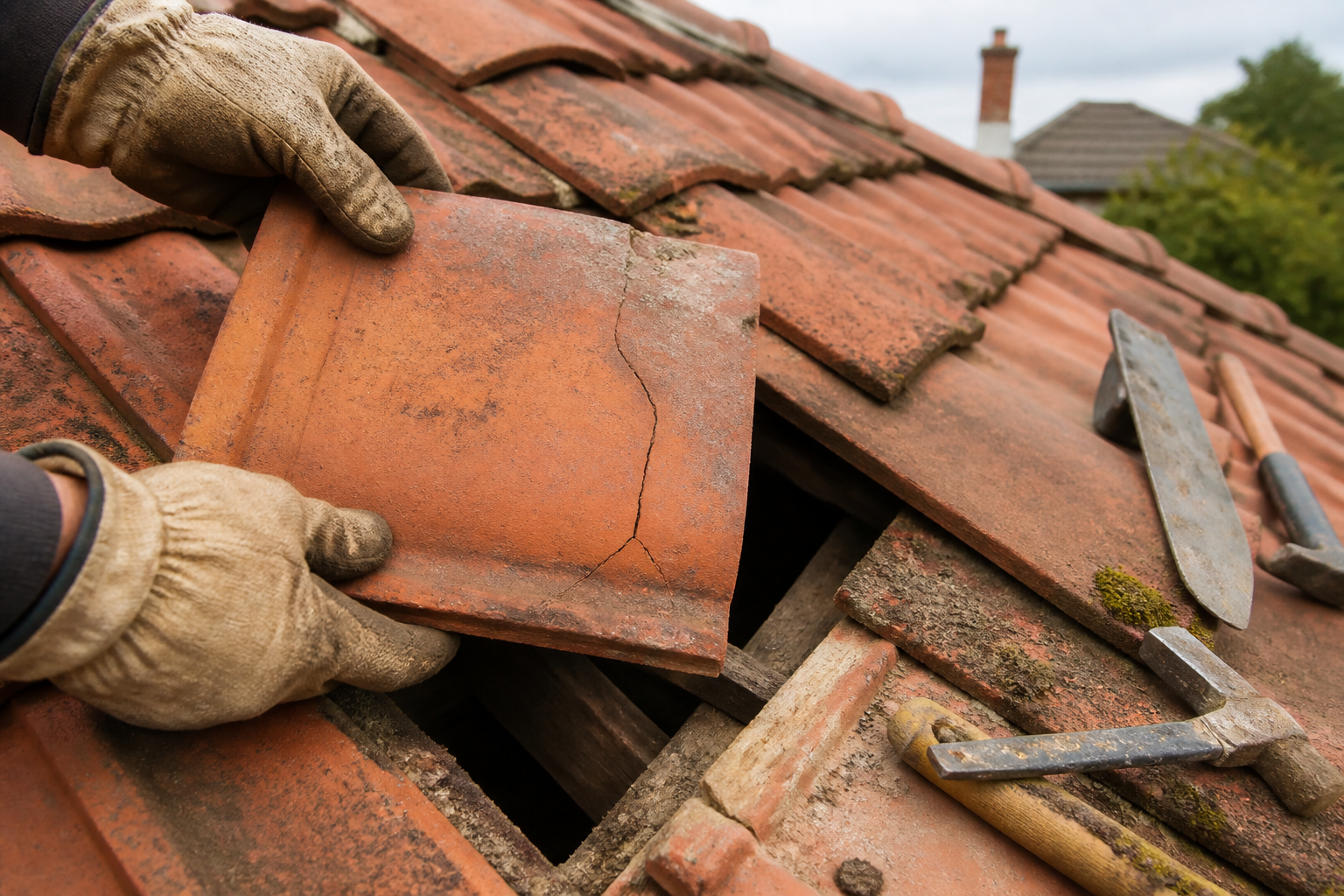 Example job type