Full re-roof vs repairs — the honest fork
Roof replacement Melbourne jobs are full re-roofs: strip the old covering, fix what’s underneath, and install a new weather envelope in Colorbond® or other metal, concrete tile or terracotta tile. That’s different from roof repairs Melbourne, which target a leak path, broken tiles, or failed flashings while the rest of the roof stays.
Choose replacement when tiles are brittle across large areas, underlay has failed widely, you’re changing the look of the home, or patch repairs keep coming back. Choose repairs when the problem is localised and the deck is still sound. If you’re unsure, say so on the enquiry — the inspection should land on one clear recommendation, not a sales fork.
Replacement scopes typically cover strip-off, disposal, underlay, new covering, flashings, and often gutters or insulation upgrades. Access, storey height and weather windows drive both price and timeline. Melbourne wet weeks stretch schedules; that’s normal, not a surprise to hide.
Is your Melbourne roof due for replacement? Read it by housing era
Melbourne’s housing stock ages in waves, and each wave tends to fail in its own way. Knowing roughly when your home was built is a useful first filter before anyone climbs a ladder:
- Victorian and Edwardian terraces and cottages (inner north, inner west, Fitzroy to Williamstown) — often slate, terracotta or old corrugated galvanised iron, with parapets and box gutters hiding the worst of it. Rusted-through iron and failed box gutters are usually the trigger; slate itself can outlast several gutters, so check our slate roofing Melbourne page before assuming a full strip.
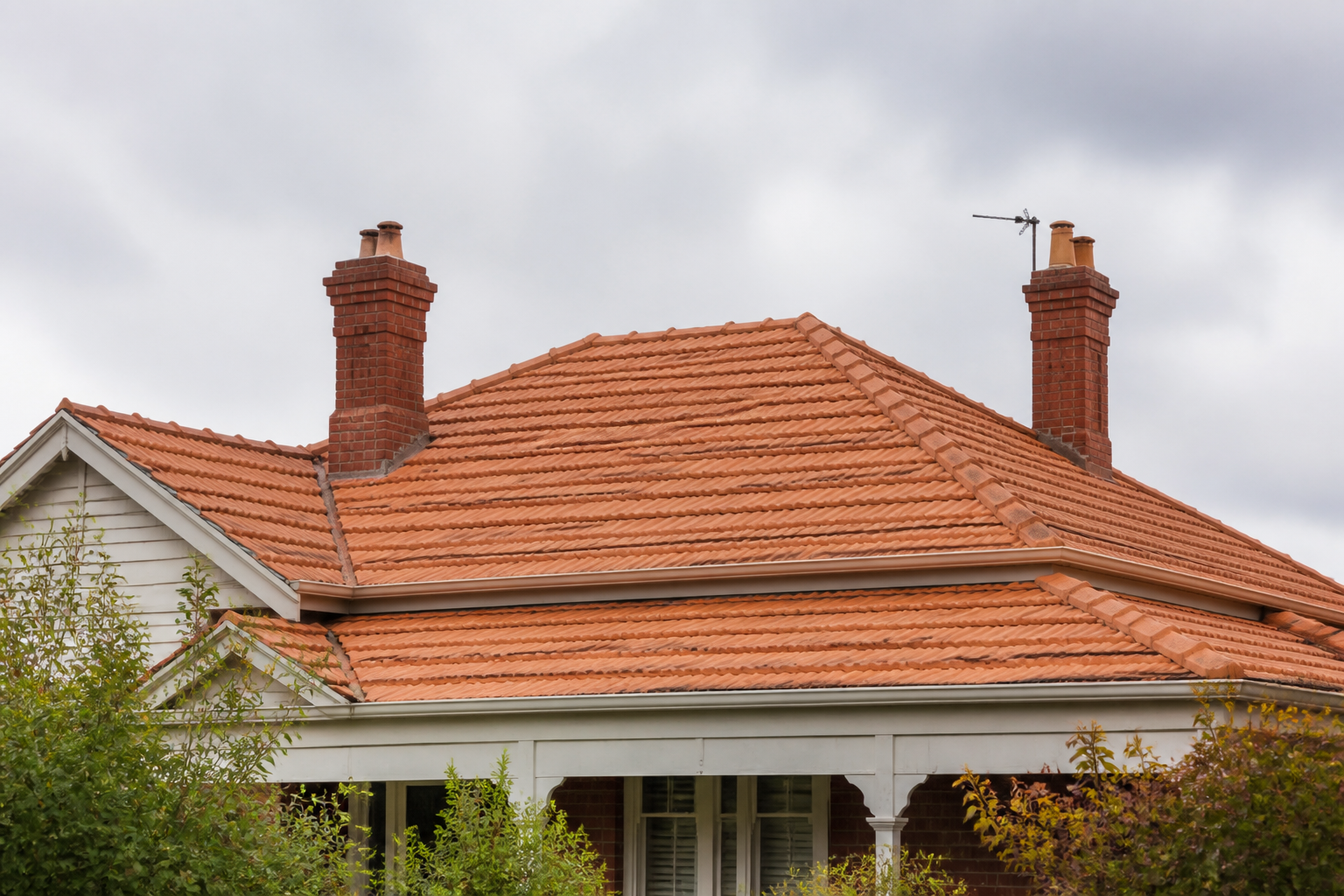
- Interwar bungalows and Californian bungalows (Coburg, Brunswick, Camberwell, Malvern, Essendon) — usually Marseille-pattern terracotta. The tiles are tough, but nearly a century of ridge mortar, no sarking and decades of patching can leave a roof that leaks in a new spot every winter.
- Post-war brick veneer and weatherboard (1950s–70s, across the east, south-east and north) — mostly early concrete tile. These are now the core of Melbourne’s replacement work: surface worn back to the aggregate, tiles that crack when walked on, and no underlay beneath them.
- 1980s–2000s estates (Narre Warren, Berwick, Werribee, Epping, Point Cook’s older streets) — concrete tile or early Colorbond®. Many are restore-or-repair candidates rather than replacements, unless storm damage, a botched coating or an extension tie-in has compromised large sections.
Age alone isn’t a verdict. The questions that actually decide it are whether the covering can still be walked on without breakage, whether leaks are spreading rather than recurring at one point, and what the battens and roof space look like from inside. That last check — torch in the ceiling space after rain — often settles a replace-or-restore argument in five minutes.
Roof replacement cost Melbourne — a rough ballpark
Searching roof replacement cost Melbourne usually returns wide bands — and that’s honest. Size, pitch, material and access move the figure more than any single “average”. As a rough guide only, many straightforward suburban re-roofs land somewhere in the mid–tens of thousands once strip-out, underlay and flashings are in; smaller or simpler jobs can sit lower, while multi-storey access, complex hips/valleys, standing seam or structural surprises climb from there. People also ask whether Colorbond® is cheaper than tile — answer: not automatically. Concrete and terracotta tile packages differ from Colorbond® metal on labour, weight and disposal; compare full scopes (strip-out + underlay + flashings), not sheet price alone.
We don’t publish fake “from $X guaranteed” prices. For drivers, extras and how to compare scopes fairly, read the deep dive: Roof replacement cost in Melbourne. Then call 0485 008 178 with suburb, current roof type and preferred material. We aim to call back the same business day — usually within a few hours.
Metal roof replacement Melbourne & Colorbond®
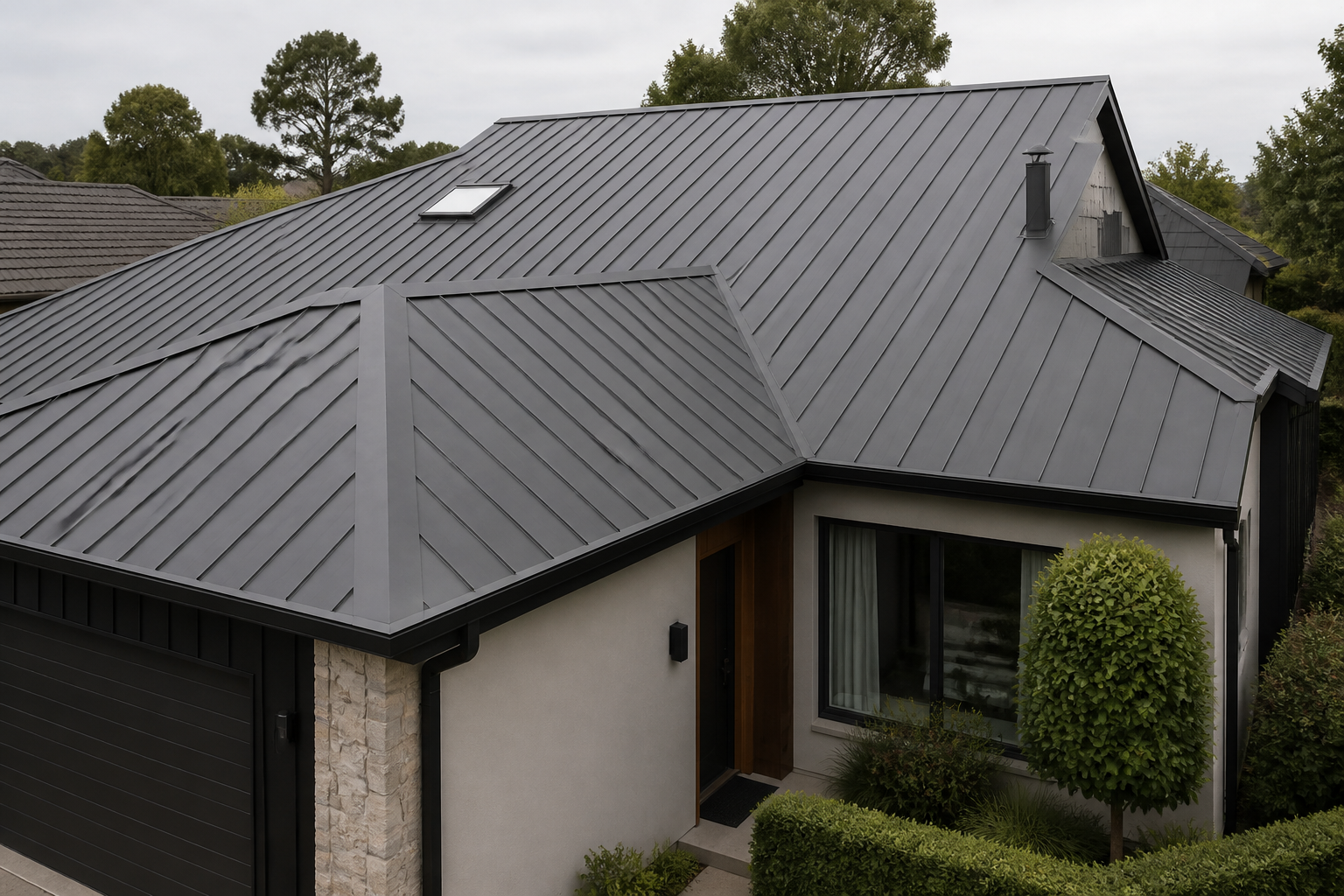
Many Melbourne homes move from aged tiles to a metal re-roof — corrugated, cladding or standing seam, commonly in Colorbond®-style steel. Weight reduction, cleaner lines and lower ongoing maintenance are the usual reasons. Profile, pitch, fixings and underlay matter as much as colour; coastal suburbs may need different corrosion considerations than inland ones.
Staying on concrete or terracotta tile preserves character on many period homes when the deck is sound and a like-for-like re-roof fits. For metal-specific profiles, overlays and installation detail, see our metal roofing Melbourne page. If you’re comparing a metal re-roof against keeping tiles and restoring them, an on-site look settles structure and budget before you commit.
When roof restoration isn’t enough
Roof restoration Melbourne — clean, rebed, point and recoat — can add useful years when the tiles and underlay are still structurally sound. It stops being the honest path when the covering itself is past recovery: widespread brittle or cracked tiles, underlay failed across large areas, repeated leak call-outs after prior restore work, or a deck that shows soft spots once you look properly. Paint on a failing envelope is lipstick, not a weather system.
Melbourne’s freeze–thaw winters, summer UV and wind-driven rain expose weak points faster than a dry climate would. If you’re already cycling through roof repairs every storm season, or a recent restore didn’t hold through the next wet stretch, a full roof replacement is usually the clearer long-term spend. The inspection should say so plainly — restore when restore will last; replace when it won’t. Tip: flag prior restore or repair history on the enquiry so scoping doesn’t re-sell a coating that can’t fix the underlying problem.
Melbourne weather, storm staging and staying weather-tight
A Melbourne re-roof has to respect the weather window as much as the material choice. Spring and summer storms, cold fronts and sudden showers mean strip-and-install can’t be left open-ended. Professional crews stage removal in sections so large areas aren’t exposed overnight when rain is forecast, with temporary protection ready when the Bureau turns. That sequencing belongs in the scope conversation before works start — not as an afterthought once sheets are coming off.
Wet-day contingency is normal here, not a delay to hide. Multi-day suburban jobs often pause for heavy rain and resume when the deck can be worked safely; ask how the home stays protected during those pauses, how gutters and downpipes are managed mid-job, and what happens if a front arrives mid-strip. Keeping the home weather-tight during a re-roof is part of doing the job properly in this climate — especially on two-storey or complex roofs where open sections take longer to close.
Tile-to-metal vs like-for-like — permits, BAL and coastal notes
Two common Melbourne paths sit under “replacement”: like-for-like (concrete or terracotta tile back to tile, or metal back to metal) and tile-to-metal (usually into Colorbond®-style steel). Like-for-like often suits period streetscapes and heritage overlays where character matters. Tile-to-metal is popular for weight reduction, cleaner lines and lower ongoing tile maintenance — but structure, pitch, insulation and drainage still need to stack up before you commit. For profile detail once you’ve chosen metal, pair this page with metal roofing Melbourne; for standing-seam specifics see standing seam metal roofs.
Compliance notes (general guidance, not legal advice): some suburbs need council notification, heritage or neighbourhood-character checks, or bushfire (BAL) aware material choices depending on overlays and site. Not every re-roof needs a full planning process, but bushfire-prone edges and character areas can shape product choice and detailing. Bayside and coastal suburbs may also need different corrosion class and fastener thinking than inland east or north. Flag your suburb, current covering and preferred path on the enquiry so scoping can catch constraints early rather than mid-job.
Asbestos and older roofs — what has to happen before strip-off
Any Melbourne home built or renovated before asbestos was banned nationally at the end of 2003 can carry asbestos cement somewhere near the roof line: fibro eaves linings, corrugated “Super Six”-style sheeting on rear additions, carports and garages, flue sleeves, or old packing under flashings. Post-war suburbs and 1960s–80s extensions are where it turns up most.
It changes the order of work, not just the price. Suspect material should be identified (and sampled where needed) before the scope is final. Under WorkSafe Victoria rules, removing more than 10 square metres of bonded asbestos needs a licensed asbestos removalist, followed by a clearance inspection before new roofing goes on. Smaller areas still need proper controls. A re-roof quote that doesn’t mention asbestos on a 1960s brick veneer with fibro eaves hasn’t looked closely enough — flag the build era on your enquiry and any sheeting you’re unsure about.
While the roof is off: sarking, insulation, ventilation and gutters
A full roof replacement is the cheapest moment you’ll ever get to fix what sits under and around the covering. Things worth deciding before the job starts, not halfway through:
- Sarking or anticon. Most pre-1980s Melbourne tile roofs have no underlay at all. Adding a reflective sarking under new tiles, or an insulation blanket under metal, cuts wind-driven rain and dust, helps with winter condensation, and slows ember entry on bushfire-prone edges.
- Ceiling insulation. The roof space is easiest to reach while battens are exposed. Old, compressed batts can be checked and topped up, though the insulation itself is usually a separate trade.
- Ventilation. Ridge vents, whirlybirds or eave vents help hot summer air and winter moisture escape — worth more under metal, where condensation drips are a common Melbourne complaint.
- Gutters, fascia and downpipes. If gutters are rusting or undersized for the new roof, replacing them in the same scaffold window saves a second setup. See gutter replacement Melbourne for what’s involved.
- Battens and structure. Hardwood battens on older roofs may be undersized for modern fixing rules; a tile-to-metal switch may need re-battening at new spacings. That should be priced as a line item, not found as a variation.
Solar panels, ducted heating flues and evaporative coolers
Melbourne roofs are crowded. A re-roof scope needs to cover everything bolted through the old covering, because each item has to come off, be stored or supported, and go back on with new flashings:
Solar panels need an accredited solar installer and a licensed electrician to isolate, remove and reinstall — roofers shouldn’t unplug arrays. Mounting changes too: tile hooks on a tiled roof versus clamps or brackets matched to a metal profile. Gas ducted heating flues, common across Melbourne’s suburbs, need their roof penetrations re-flashed properly, with any gas work done by a licensed gasfitter. Evaporative coolers on the roof have to be lifted and re-seated on a sound, flashed base — and a re-roof is a good point to decide whether an ageing unit is worth keeping. Aerials, satellite dishes and skylights round out the list. Name all of them on the enquiry so the free quote includes them instead of surprising you later.
From enquiry to handover — a typical Melbourne re-roof
- Enquiry. Suburb, build era, current covering, storeys, roof-top equipment and photos.
- On-site inspection. Walk the roof where safe, look in the ceiling space, measure, and check access, overlays and asbestos risk.
- Written scope and free quote. Material and colour, underlay, battens, flashings, gutters, equipment removal and reinstall, disposal and a wet-weather plan.
- Contract, approvals and ordering. Any council or heritage checks, asbestos removal booked first if needed, materials ordered with lead time on specific Colorbond® colours or tile profiles.
- Scaffold and edge protection. Required for fall safety on most re-roofs, and usually the first thing your neighbours notice.
- Strip, re-batten and close up in sections. Staged around the forecast so the home isn’t left open overnight.
- Flashings, ridges, gutters and equipment reinstall. Solar, flues, coolers and skylights go back on with new flashings.
- Clean-up and handover. Gutters cleared of swarf and debris, a magnet sweep for screws and offcuts, then the paperwork below.
Contracts, licences, insurance and warranties in Victoria
A roof replacement is a significant building job, and in Victoria it comes with paperwork worth asking about up front. This is general orientation, not legal advice:
Metal roof sheeting, flashings, gutters and downpipes count as roof plumbing work in Victoria, which has to be done by a licensed or registered plumber, and a compliance certificate is issued for work above the regulated value. Larger domestic jobs need a written domestic building contract, and domestic building insurance applies above a set contract value — ask how both are handled. Separate out two kinds of warranty: the manufacturer’s product warranty (which can depend on the site’s distance from the coast and on correct installation) and the workmanship warranty on the installation itself. You can check licence numbers on the state regulator’s public register. A clean handover pack makes the roof easier to insure, easier to sell, and much easier to claim on if something fails.
Ready to talk through options? Call 0485 008 178 with suburb, roof type, storeys and any photos. We aim to call back the same business day — usually within a few hours.

 Example job type