Why Melbourne homes choose metal
Metal roofing Melbourne jobs are valued for weight, long service life when detailed correctly, and a clean finish that suits renovations and new work. Success depends on underlay, fixings, flashings and ventilation — not just the colour of the sheet. Australian materials here mean Colorbond® / metal — not asphalt shingles.
Colorbond®-style steel is the everyday search term for a reason: it’s widely available, colour-stable, and familiar to local crews. Coastal and bayside homes may need different corrosion considerations than inland suburbs — mention yours so the scope fits the environment.
Enquire here and we organise the next step with our roofing partner. Licence and insurance details are confirmed at scoping, and warranty is set out in the agreed scope — one enquiry, no chasing three quotes.
Metal roof installation Melbourne — step by step
A typical metal roof installation Melbourne scope covers more than sheets on battens. Expect a staged path:
- Enquiry & triage — suburb, current covering, preferred profile/colour, storey height and whether leaks are active.
- On-site inspection — pitch, structure, access, existing underlay, flashings and drainage. Overlay vs full strip decided here, not on a phone estimate alone.
- Scope & materials — Colorbond®-style colour and profile confirmed; underlay, fastener pattern, flashings, ridges and any gutter or insulation upgrades listed before materials are ordered.
- Prep — strip or overlay prep, disposal where required, temporary weather protection sequenced around Melbourne wet weeks.
- Install — sheets or panels fixed to the agreed pattern; laps, barges, ridges and penetrations detailed so water has a clear path off.
- Finish & hand-over — drainage check, tidy-up, and warranty discussion tied to the agreed scope.
Access, pitch and storey height shape both labour and timeline. Two-storey homes, tight side access and complex hips/valleys take longer than a simple single-storey suburban rectangle — that’s normal, not a surprise to hide.
Colorbond® vs tile-to-metal
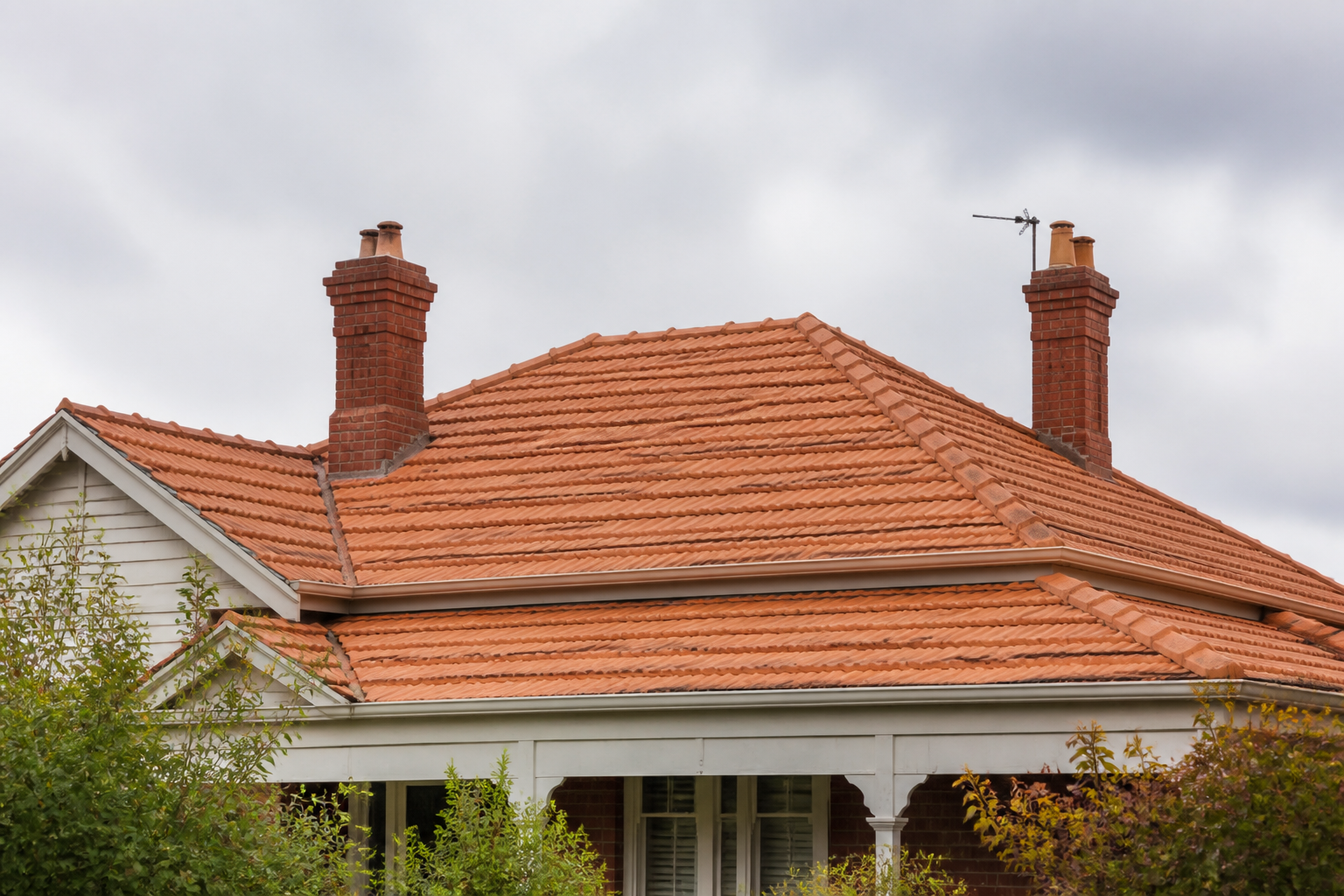
Many Melbourne homeowners stay on concrete or terracotta tile when character matters and the deck is sound. Others move to Colorbond® metal for weight reduction, cleaner lines and lower ongoing tile maintenance. Tile-to-metal is common on renovations and end-of-life tiled roofs — but structure, pitch, insulation and bushfire considerations should be checked before you commit.
Planning a full strip-and-replace into Colorbond® metal? Pair this page with roof replacement Melbourne — that’s the end-to-end re-roof conversation, including tile-to-metal, access, disposal and timeline. This page is the metal-materials and profile deep-dive; replacement is the full re-roof path.
Colorbond®, Zincalume® and Ultra — Melbourne marine & industrial air
Colorbond® roofing Melbourne searches often land here for a reason: coated steel is the everyday metal cover across the metro. The grade still has to match the air. BlueScope’s roofing selection guide (Technical Bulletin TB-01A) ties product choice to distance from the high-water / tide mark and whether the marine influence is breaking surf, exposed or calm — with local wind, shelter, elevation and unwashed areas able to change the call. As a simple published guide: standard COLORBOND® steel (Classic / Matt finishes) is typically recommended beyond about 200 m from breaking surf or exposed marine; COLORBOND® Ultra steel is the usual step-up between about 100–200 m from surf; very severe marine sites may need SUPERDURA® stainless-grade options. Calm marine (much of Port Phillip Bay’s sheltered water) has different published thresholds again — so suburb name alone is not a specification.
Practically for Melbourne: homes on or near Port Phillip Bay and Western Port — Williamstown, Altona, the bayside strip, Mornington Peninsula and Frankston exposure — should have marine class written into the scope, not copied from an inland east template. The industrial west (and other heavy fallout sites) can also push toward Ultra or a manufacturer-advised grade even away from the water; BlueScope flags severe industrial conditions as a Steel Direct conversation, not a DIY guess. Zincalume® (unpainted aluminium/zinc/magnesium-coated steel) remains common on sheds, garages and some commercial roofs inland, but near the bay the coated Colorbond® / Ultra path is usually the conversation homeowners expect for the house itself.
Dissimilar metals, cut edges and swarf
Copper or lead flashings that shed onto Zincalume® or aluminium/zinc-coated pans can set up dissimilar-metal corrosion — a classic trap when a chimney, box gutter or heritage detail is patched with the wrong metal above a newer sheet roof. Cut edges, drill swarf left on pans after install, and unwashed areas under solar arrays or eaves also age coatings faster than a clean, rain-washed pitch. Good scopes call out compatible flashings, swarf clean-down and edge treatment rather than treating “Colorbond®” as a magic word that forgives detailing.
Profiles by Melbourne housing era
Profile choice is as much about the house as the brochure. Matching era and pitch keeps the street looking honest and the water path working:
- Corrugated (Custom Orb®-style) — the familiar ripple on Victorian and Edwardian cottages, weatherboard bungalows and many heritage streetscapes. Where a heritage overlay applies, council is the authority on colour and profile limits; like-for-like corrugated is often the path that keeps the front elevation coherent. Manufacturer minimum roof slope for classic corrugated is typically around 5° — confirm against the product data for the exact sheet ordered.
- Concealed-fix (Klip-Lok® / Kliplok-style) — clip-fixed pans without a line of screw heads, popular on contemporary renovations and low-pitch planes. Lysaght Klip-Lok® families publish minimum slopes down around 1–2° depending on product and base-metal thickness — useful on skillions and near-flat extensions where corrugated would be under-pitched.
- Trimdek®-style trapezoidal rib — clean ribs and wide pans on low-pitch skillions, garages, alfresco roofs and many 1980s–2000s additions. Published minimum slope is typically around 2°. Strong spanning on wider purlin centres makes it a common choice when the frame was never designed for a steep corrugated pitch.
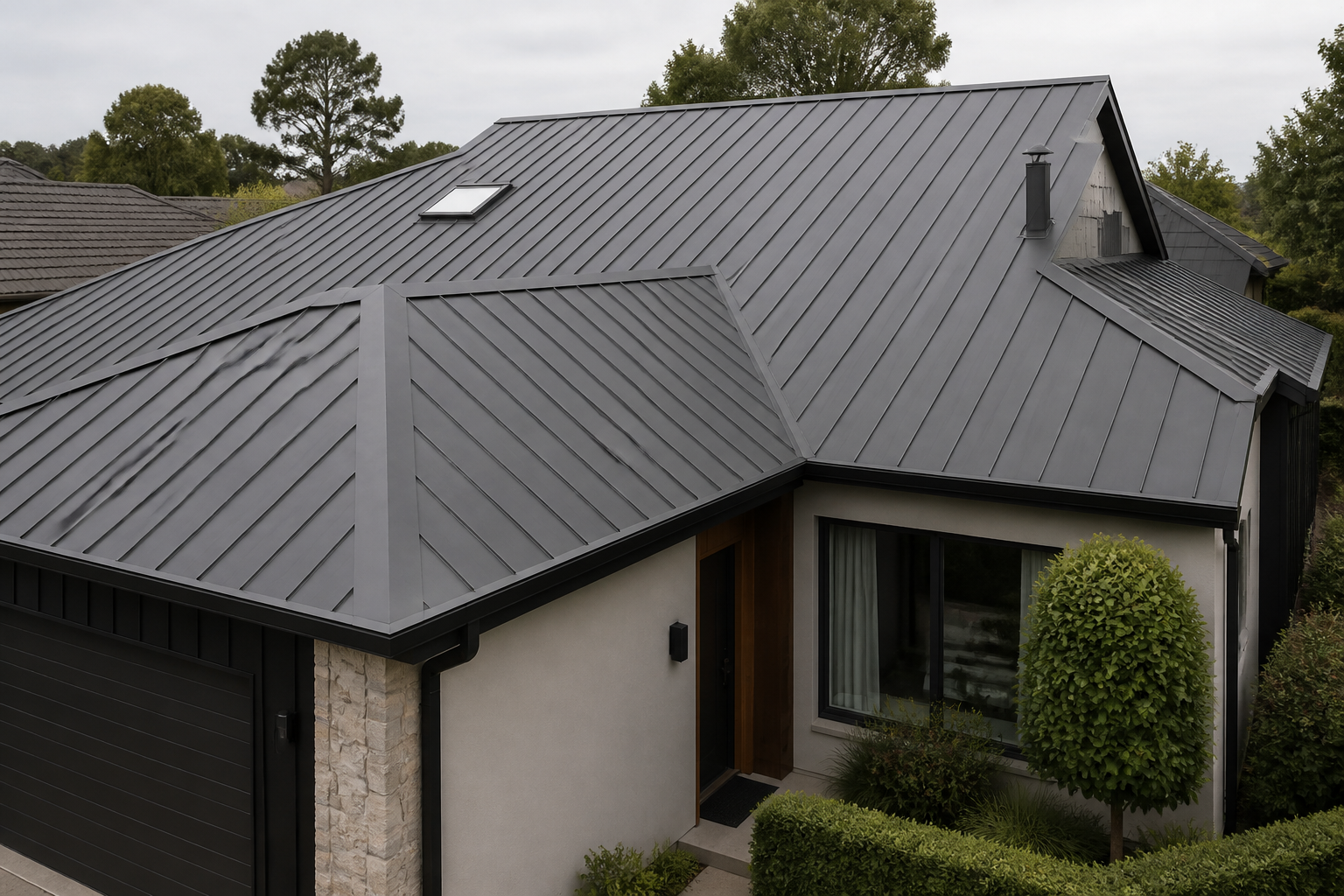
- Standing seam — architectural feature roofs and some renovations wanting a premium contemporary line. Different fixing and expansion detailing; see our standing seam metal roofs guide.
Minimum pitch always follows the manufacturer’s data for the exact profile and thickness — not a rule of thumb from a neighbouring suburb. If a Melbourne extension or skillion sits flatter than corrugated allows, the honest fork is a low-pitch profile (or a pitch change), not forcing Custom Orb®-style sheet onto a near-flat plane. Skylights and penetrations need profile-matched flashings on every system — rushed silicone is a future leak. Read skylights on metal roofs or the service page for skylights Melbourne if daylight is on the plan.
Melbourne winter condensation and rain noise
Metal conducts cold. In Melbourne’s cool, damp winters — especially in the outer east foothills and Dandenongs-edge suburbs (think Ferntree Gully, Bayswater, Croydon, Ringwood) — warm moist air from bathrooms and living rooms can hit a cold sheet underside and drip into the roof space if underlay and ventilation are thin. That is one reason tile-to-metal swaps that skip a proper anticon blanket or suitable sarking often create a new “leak” that is really condensation.
A sensible metal build-up usually includes a reflective or bulk underlay (anticon-style blanket is common), planned roof-space ventilation, and attention to exhaust fans that currently dump moisture into the attic. Rain noise softens with the same layers — bare sheet over an empty roof space is louder than sheet over blanket and sarking. Mention bathroom steam, prior mould in the roof space, or a planned tile-to-metal swap on the enquiry so underlay is scoped as part of the weather system, not an optional extra. For the full strip-and-replace path including wet-weather staging, pair this page with roof replacement Melbourne.
Wind, hail and ember sealing on Melbourne metal roofs
Western-plains and open-estate suburbs — Melton, Werribee, Point Cook and similar — see stronger sustained wind and UV than a sheltered inner-east street. Fastener pattern, washer condition and edge fixing matter more when sheets can work loose over seasons; bay-facing homes add wind-driven rain that tests laps and barge flashings. After hail or a gusty front, loose or creased sheets and backed-out screws are a common triage path on existing metal — localised work often sits on roof repairs Melbourne, while widespread fatigue pushes toward re-sheet or full replace.
On the bush-fringe (Doncaster hills, Croydon, Ferntree Gully and other BAL-rated edges), ember sealing belongs in the metal conversation: gaps at ridges and eaves closed thoughtfully, suitable mesh where required, and detailing that doesn’t leave unscreened openings into the roof space. BAL is site-specific — share the exact address early so ember and material notes are checked against the site, not assumed from a suburb name alone. None of this replaces a bushfire consultant where one is required; it simply means metal scopes on the fringe should not ignore ember paths.
Re-sheeting old galvanised iron vs a full metal re-roof
Plenty of Melbourne roofs still carry original or mid-life galvanised iron. When the sheets are tired but the structure, battens and drainage are sound, a like-for-like re-sheet into Colorbond®-style steel can be the right fork: new pans, correct fasteners, and flashings remade at ridges, barges and penetrations. When underlay has failed, flashings are a patchwork, or parapet box gutters behind Victorian/Edwardian fronts are the real leak source, a fuller re-roof — or parallel roof-plumbing work — is the honest path. Box gutters, rainheads and valley irons are scoped on roof plumbing Melbourne; end-to-end strip, disposal and timeline live on roof replacement Melbourne.
Skylights cut into metal need kerb or soaker flashings matched to the profile — see skylights Melbourne and the skylight on a metal roof guide. Solar arrays add rail loads, penetration seals and shaded “unwashed” pans that can hold salt or leaf longer; if panels are staying or planned, say so on the enquiry so mounting zones and walkable pans are considered before sheets are ordered. Photos of the current iron, any ceiling stains and whether solar or a skylight is involved help triage re-sheet vs full replace before materials hit the driveway.
Metal roofing cost in Melbourne — a rough guide
Metal install pricing moves with roof size, pitch, profile, storey height, access and whether you’re overlaying or stripping to a full re-roof. As a rough guide only, major metal sections and straightforward Colorbond®-style installs on accessible single-storey homes sit well below a complex standing-seam or multi-storey full strip; full tile-to-metal replacements are scoped on the roof replacement page and often land in the broader re-roof bands discussed there. We don’t publish fake “from $X guaranteed” sheet prices — colour, profile, underlay and flashings belong in one clear scope before materials are ordered.
If you’re comparing quotes, ask for the same inclusions: substrate/underlay, fastener pattern, flashings/ridges, disposal (if stripping), gutter works if needed, and weather contingency. Licence and insurance details are discussed at scoping; warranty is discussed on scope once the job is defined. Phone 0485 008 178 with suburb and current roof type. We aim to call back the same business day — usually within a few hours.
Overlay vs full replace
Metal overlays over concrete or terracotta tiles are sometimes possible — never assumed. Structure, pitch, insulation, ventilation and compliance have to stack up. When they don’t, a full strip into Colorbond® / metal is the cleaner long-term path. Cross-link: for end-to-end strip, disposal and re-roof timeline, use roof replacement Melbourne; for material and profile decisions, stay on this page. Localised fastener and lap issues on existing metal often belong on roof repairs instead.
Phone 0485 008 178 with your suburb and whether you’re replacing tiles or repairing existing metal. We aim to call back the same business day — usually within a few hours.

 Example job type