Why fascias rot in Melbourne
Fascia timber doesn’t fail on its own. It fails because it stays wet, and Melbourne gives it plenty of ways to stay wet:
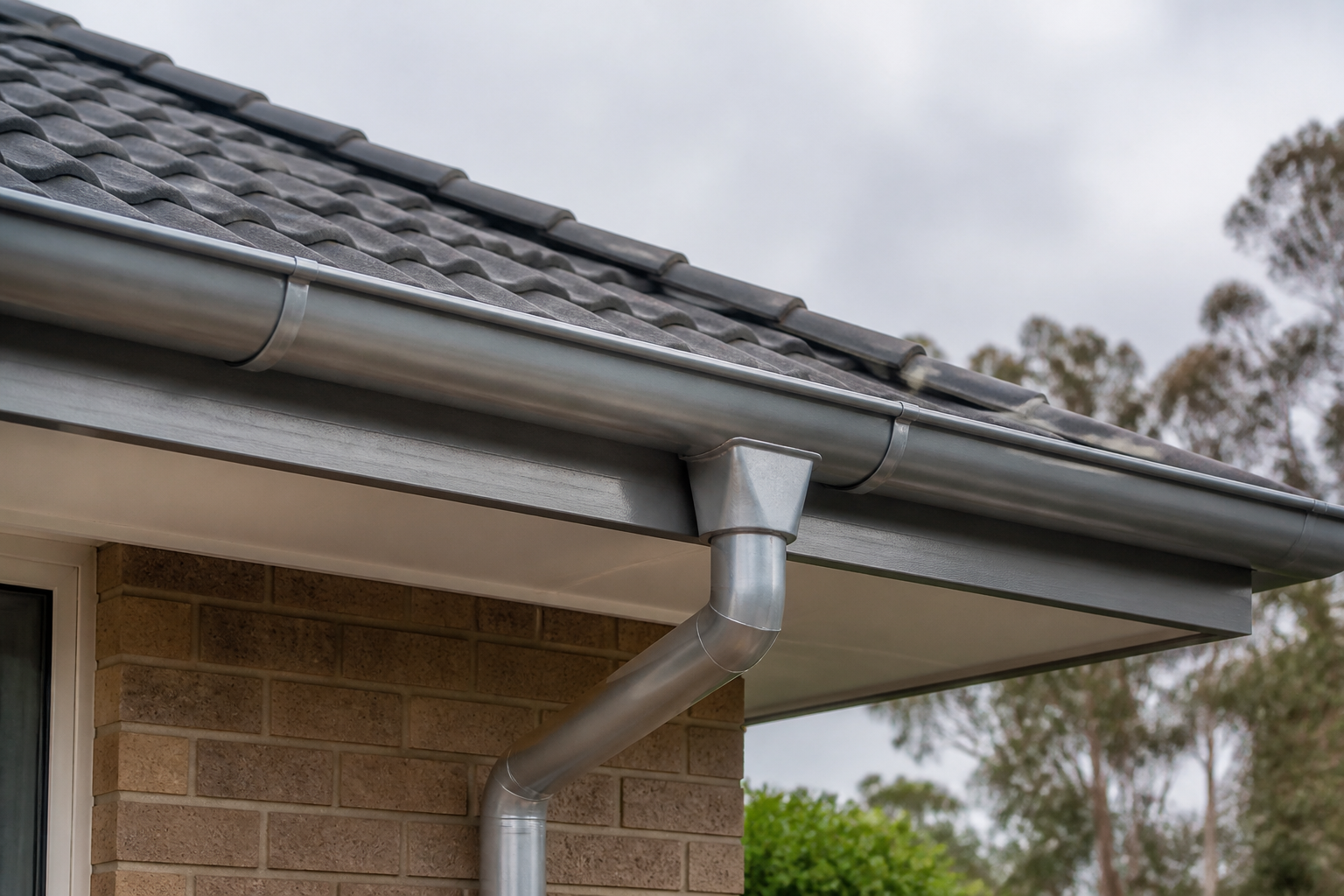
- Overflow that runs backwards. When a gutter is fixed tight to the fascia and its front edge sits as high as the back, a heavy summer storm sends the overflow behind the gutter — straight down the face of the board and into the eaves. It is one of the most common causes of fascia rot on 1990s and 2000s homes.
- Gutters with too little fall. A gutter that sits level or sags between brackets holds a strip of water against the fascia for days after rain.
- Leaf litter. In the leafy east and north-east — Ringwood, Mitcham, Eltham, Ferntree Gully, Boronia — gum leaves and bark pack the gutters into a wet mat that holds moisture against the board all winter. See gutter cleaning Melbourne and gutter guards Melbourne for keeping that under control.
- Shade and drizzle. South-facing eaves and foothills homes stay damp through Melbourne’s long, grey winters, and timber that never fully dries is where rot starts.
- Sun on the paint. North and west-facing fascias take hard summer UV, which cracks the paint film. Once water gets into those cracks, the timber underneath starts to go.
- Joints and downpipe outlets. A gutter joint or outlet that has dripped for years usually has a soft patch of fascia directly behind it.
The practical upshot: replacing the board without fixing the cause just resets the clock. A good scope names the cause — overflow detailing, fall, downpipe count, leaf load, paint — and deals with it at the same time.
Fascia by Melbourne housing era
- Victorian and Edwardian homes in Brunswick, Northcote, Williamstown, Hawthorn and Richmond often have moulded timber fascias, half-round gutters on brackets, and decorative barge boards with finials on the gables. Much of the original timber has been patched many times. Matching profiles matters here, and heritage overlays are common.
- Interwar bungalows in Coburg, Preston, Camberwell and Malvern have wide eaves, exposed rafter ends on some styles, and timber barges on prominent street-facing gables. Rot often reaches the exposed rafter tails as well as the fascia.
- Post-war weatherboard and cream brick across Reservoir, Sunshine, Bentleigh and Box Hill usually have plain timber fascia under galvanised or replacement quad gutters — and many have fibre cement eaves lining from the era, which needs care.
- 1970s–80s brick veneer in Glen Waverley, Doncaster, Frankston and the middle-ring east is the classic timber-to-steel upgrade: simple runs, long eaves and timber that has had forty-plus years of overflow.
- 1990s onward estates in Point Cook, Tarneit, Craigieburn, Cranbourne, Berwick and Pakenham mostly have steel fascia already. Problems are less about rot and more about overflow detailing, dented or scratched sections, and the timber or rafter ends behind the steel where water has been getting in.
Barge boards and gable ends
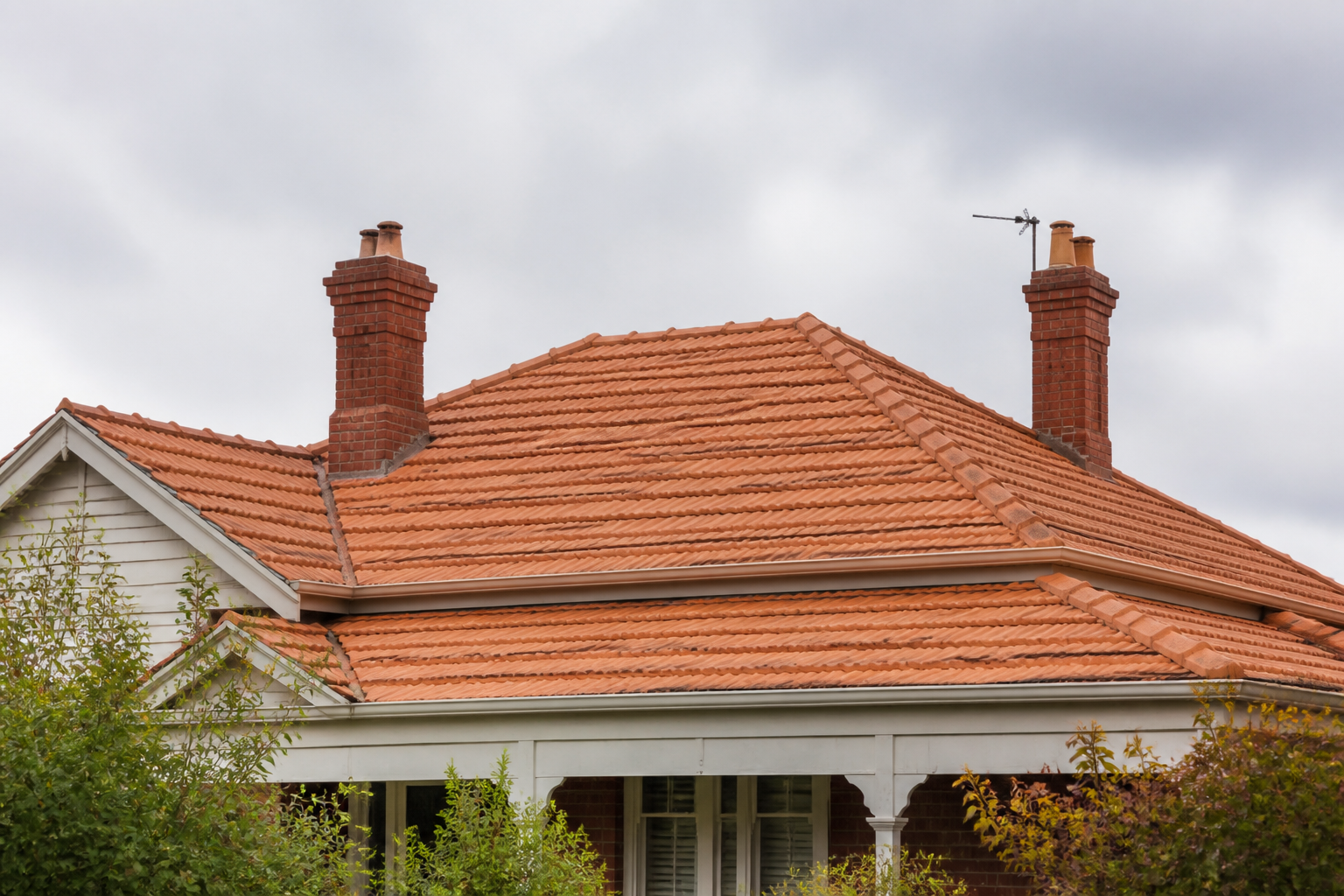
Barge boards take more weather than people expect. They sit on the most exposed edge of the roof, with no gutter above to shelter them, and catch the full force of Melbourne’s gusty northerlies and the westerly fronts that come through in winter and spring. On tiled roofs the barge also supports the edge tiles and the pointed barge capping above it, so a rotten barge can let tiles and capping move.
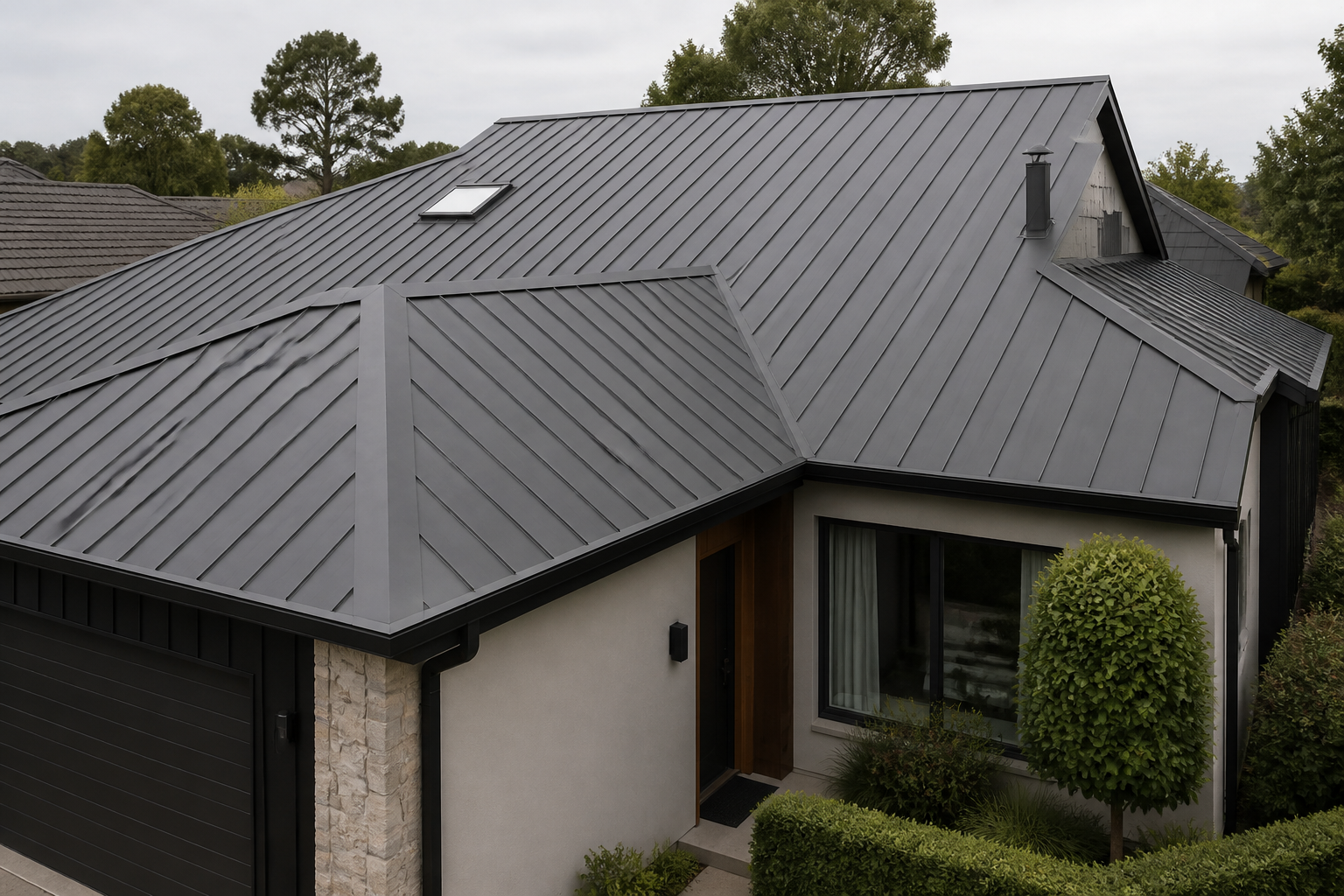
On a tiled gable the scope usually includes the barge board itself, the mortar or flexible pointing on the barge tiles, and any loose edge tiles — overlapping with roof tiling Melbourne work. On a metal roof the gable edge is normally finished with a steel barge capping over the board or the last sheet, and a loose or rusted capping is a common storm-damage call. Decorative timber barges on period homes are a craft job: the old board is often used as a template for a new one cut to the same pattern.
What’s behind the board — rafter ends and eaves lining
The fascia is the part you can see, but the quote is really decided by what’s behind it. When a board has been wet for years, the water usually reaches the rafter ends (the tails the fascia is nailed to) and sometimes the eaves lining and the timber that supports it. Soft rafter tails need cutting back and repairing with new timber fixed alongside before a new fascia can be fixed securely.
A careful tradesperson will often only be able to confirm the full extent once the old board is off, so it’s reasonable for a quote to include an allowance or a rate for rafter-end repairs if more is found. Ask how that will be handled and that you’ll be shown photos before extra work goes ahead.
Asbestos eaves lining on older homes
Many Melbourne houses built before about 1990 have flat fibre cement sheet in the eaves, and older sheets may contain asbestos. It is generally low risk while it is left intact and undisturbed — the risk comes from cutting, drilling, sanding, snapping or water-blasting it. Fascia replacement often brushes up against the eaves lining, so it pays to know what you have before work starts.
If the house is the right age, the sheet should be tested or treated as if it contains asbestos. Small amounts can be worked around carefully, but larger areas must be removed by a licensed asbestos removalist under WorkSafe Victoria rules. Mention the age of the house in your enquiry so the inspection allows for it, rather than discovering it halfway through the job.
Heritage overlays and period details
Across inner Melbourne — Williamstown, Fitzroy, Carlton, Kew, St Kilda, Brighton and parts of Northcote — many streets are under a heritage overlay. Fascias, barge boards, finials and gutter profiles are part of the streetscape the overlay looks after. Like-for-like repair and replacement is often straightforward; swapping a moulded timber fascia or decorative barge for plain steel, or changing a half-round gutter to square-line, may need a planning permit.
Check with your council before choosing materials. Where the original detail matters, new timber can be milled to match the old moulding and decorative barges reproduced from the existing pattern, then painted in a period-appropriate colour.
Bushfire-prone edges of Melbourne
On the urban fringe — the Dandenong Ranges foothills around Ferntree Gully and Lilydale, the green wedge around Eltham and parts of the outer north and south-east — homes may sit in a Bushfire Management Overlay or carry a BAL rating. The roof edge is where embers collect: leaf-filled gutters, gaps behind fascias and openings under barge boards are exactly where ember attack starts.
If your home has a BAL rating or sits in an overlay, mention it. Material choice for fascias, barges and gutters, and how gaps into the roof space are sealed, can be matched to the rating and to current requirements, and metal gutter guard is often considered at the same time.
Possums, birds and gaps into the roof
A rotten fascia corner or a gap under a barge is one of the easiest ways for a possum to get into a Melbourne roof. Thumping at night, droppings on the eaves and stained ceilings are the usual clues. Brushtail and ringtail possums are protected in Victoria, so before gaps are closed the animal should be dealt with humanely — usually by a licensed possum handler — and a nesting box offered nearby so it has somewhere else to go. Sealing it inside the roof is both cruel and smelly.
Once the roof space is clear, new fascia and barge boards close the entry points properly, and any gaps at the top of the wall or behind the gutter can be sealed at the same time. Birds such as Indian mynas and sparrows use similar gaps in the corners of boxed eaves.
Painting timber fascia — and matching colours
New timber fascia should be primed on all faces, including the back and the cut ends, before it goes up — the back of the board is where water sits, and unprimed end grain soaks it up. It then gets top coats once fixed. Existing sound fascia that just needs a refresh can be done as part of a repaint of the roof edge, or alongside a roof painting Melbourne job if the roof itself is being recoated.
With steel fascia, the colour is chosen up front. Most homeowners match the gutter, and either match or contrast with the roof. On estate homes, check any colour guidelines, and on townhouses and units check owners corporation rules, before picking a colour that changes the look of a shared roofline.
Fascia replacement cost in Melbourne — what moves the price
We don’t publish made-up per-metre prices. The things that actually drive a fascia quote are:
- Total length of fascia and barge, and how much of it is actually rotten
- Single or double storey, and whether scaffolding or edge protection is needed
- Timber or steel, standard or heritage profiles, and decorative barge boards
- Rafter-end and eaves repairs behind the board
- Whether the gutters and downpipes are refitted or replaced at the same time
- Priming and painting of timber, and colour choice for steel
- Asbestos eaves lining, possum proofing and disposal of old materials
Bundling fascia with gutter replacement, a roof restoration or a re-roof usually gives the best value, because access is the expensive part of roof-edge work. Planning a roof replacement Melbourne project in the next year or two? Say so in the enquiry and the fascia can be scoped to suit.
Questions worth asking before you go ahead
- Which sections did you probe, and can I see photos of the rot?
- Are you replacing, splicing or covering each run — and why?
- How will rafter ends found rotten behind the board be handled and priced?
- Are the gutters being refitted or replaced, and how will overflow be dealt with?
- Is the eaves lining likely to contain asbestos, and how will it be protected?
- Will timber be primed on all faces before fixing?
- Are barge boards and barge capping included?
- What happens if rain arrives while the roof edge is open?

 Example job type