Skip to content
Melbourne Roofers

Roof Painting Melbourne

Faded Colorbond®, chalky concrete tiles or an old iron roof starting to rust at the laps? Enquire here and we’ll organise a free quote to repaint your roof the right way — prepared properly, primed for the surface it’s going on, and checked first to make sure paint is actually what the roof needs.

  • Metal, galvanised and sound tile roofs
  • Colour, heritage and estate rules considered
  • Local Melbourne focus · free quote
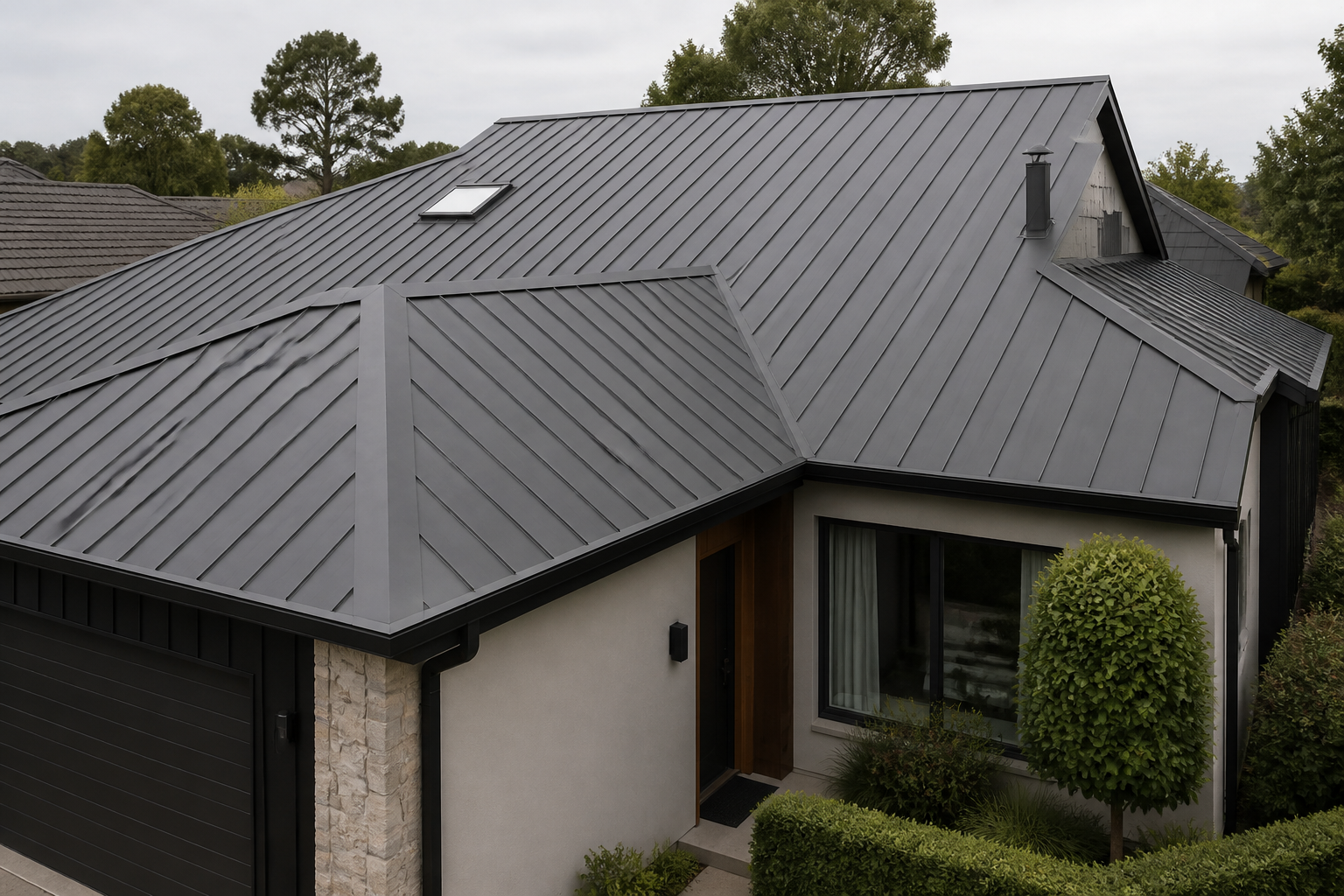
Repainted metal roof on a Melbourne home

Roof painting quote

Tell us what’s going on — we’ll help get your roof sorted.

What happens next

  1. We review your suburb and job details.
  2. We organise the next step with our roofing partner.
  3. You’ll hear back to arrange an inspection or quote.

We aim to call back the same business day — usually within a few hours.

Free quote Melbourne suburbs Roof checked before it’s painted Coating matched to the surface

Roof painting or roof restoration — which do you need?

Roof painting Melbourne enquiries cover two quite different situations, and it pays to know which one you’re in before you compare quotes. The first is a roof that keeps the weather out perfectly well but looks tired: a Colorbond® roof that has faded and gone chalky, a galvanised iron roof with the odd rust spot, or a concrete tile roof that was restored a while back and now needs fresh top coats. That is a painting job.

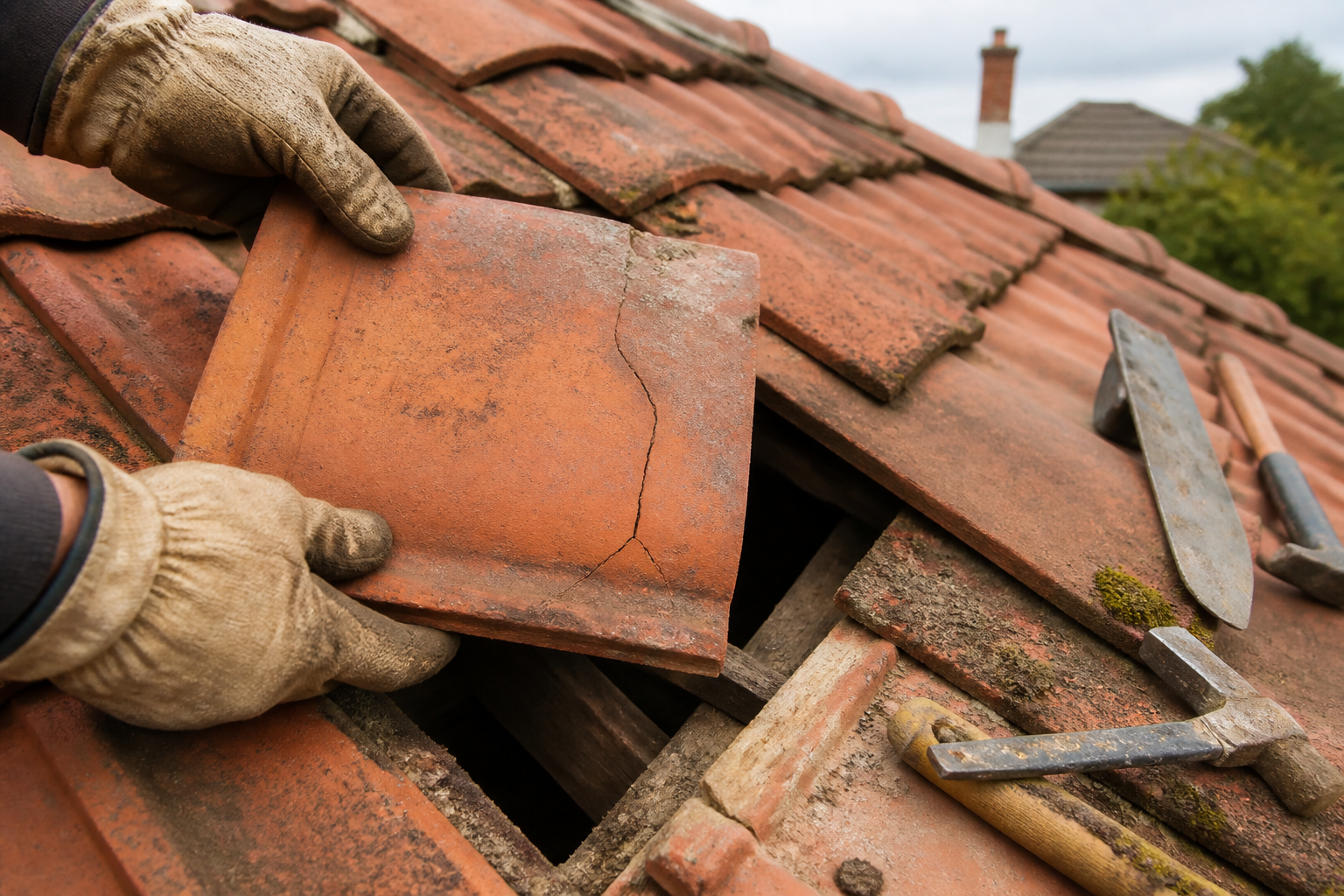
The second is a tiled roof with cracked ridge pointing, loose ridge caps, broken tiles or worn valleys. Paint will not fix any of those. That roof needs the repair work done underneath the coating — which is what a roof restoration Melbourne scope covers. A common problem is the “paint-only” quote on a roof that really needed restoration: it looks good for a summer, then the same leaks return under a new colour.

A quick way to sort it:

  • Metal roof, sheets sound, finish faded or chalky — painting.
  • Metal roof with surface rust at laps, fixings or edges — painting with rust treatment, if the steel is still solid.
  • Concrete tiles restored in the past, ridges still tight — painting (a recoat).
  • Tiles with crumbling pointing, broken tiles or leaks — restoration, not paint.
  • Metal rusted through, or tiles cracking across whole pitches — roof replacement Melbourne.

Not sure? Send photos with your enquiry. The inspection should tell you plainly whether a coat is enough, and we’d rather point you to the right scope than sell a coat that won’t last.

Repainting Colorbond® and pre-painted steel

A large share of Melbourne’s newer homes, extensions and re-roofs are pre-painted steel. The factory finish is very durable, but after many years of UV it can fade unevenly, chalk (leave a powdery residue on your hand), and in harsh spots — near the bay, under dripping trees, or where dissimilar metals have run onto the sheet — begin to show corrosion. Repainting is a way to bring back the colour and add a protective layer while the steel underneath is still in good shape.

The preparation is what decides whether the new paint holds. In general terms it means:

  • A low-pressure wash with a cleaner suited to coated steel, working with the ribs, to remove dirt, salt, mould and chalk.
  • Checking adhesion of the old finish — if it peels away, it has to come off before anything goes on.
  • Treating any rust at laps, cut edges, screw heads and around flashings, and replacing fixings that have corroded.
  • Priming where the system calls for it, then two top coats of a paint made for pre-painted steel roofs.

The steel maker publishes technical guidance on repainting its products, and the coating manufacturer will have its own data sheet. Ask whether the proposed system follows both. If the roof is under a manufacturer warranty, check how painting affects it before you go ahead. For roofs where the steel itself is failing, the metal roofing Melbourne page covers re-sheeting options instead.

Zincalume® and old galvanised iron roofs

Bare metallic-coated roofs are a different job from Colorbond®. Zincalume® — the silver-grey finish common on sheds, garages, verandahs and some houses — doesn’t usually need painting, but owners often want a colour to match the house or to cut glare. Paint won’t stick to bare Zincalume® or galvanised steel without the right primer, so ask specifically which primer is being used and whether it is made for that surface.

Old galvanised corrugated iron is still on plenty of Victorian, Edwardian and interwar homes in Brunswick, Northcote, Footscray, Williamstown, Coburg and Essendon. Many of these roofs were painted decades ago, sometimes several times. Typical problems are flaking paint, rust bleeding from nail holes and laps, and rust along the bottom edge where sheets meet the gutter. If the rust is on the surface, it can be wire-brushed back, treated and primed before painting. If you can push a screwdriver through it, or light shows through in the roof space, it’s past painting.

Older roofs bring one more issue: lead. Homes painted before the 1970s may have lead-based paint in the older layers. Scraping, sanding or blasting that paint creates dust that should not end up in your gutters, garden or rainwater tank. Australian government guidance on lead-safe painting covers testing and containment; it’s worth asking how the old paint will be dealt with on your roof.

Repainting concrete and terracotta tiles

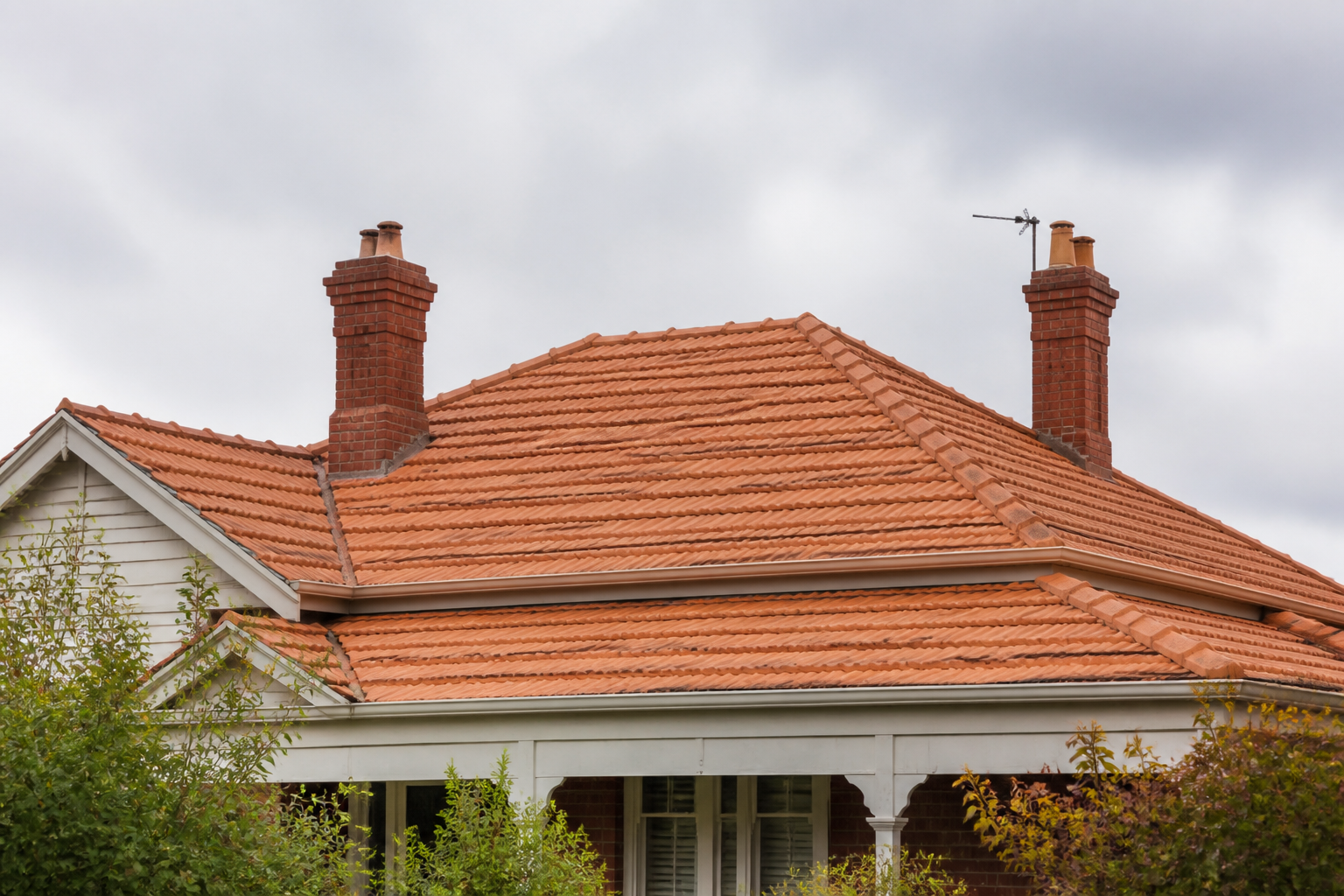
Concrete tiles are the most common painted roof in Melbourne’s post-war and estate suburbs — Box Hill, Glen Waverley, Doncaster, Reservoir, Werribee and many others. When a concrete roof has already been restored and its ridges are still firmly bedded and pointed, a later recoat — clean, any spot repairs, and fresh top coats — is a painting job and doesn’t need the full restoration scope again.

The things to check before agreeing to a tile repaint are the pointing (any cracking or gaps), loose or broken tiles, and how well the previous coating has held. A coating that is peeling in sheets usually means poor preparation last time, and it will need more cleaning back before the new coats go on.

Terracotta is more of a judgement call. Glazed terracotta should generally be left unpainted, because the glaze is the finish and paint struggles to bond to it. Unglazed terracotta can be sealed and painted if you want a colour change, but natural terracotta is part of the character of many Federation and interwar streets, and painting it may need a planning permit under a heritage overlay. Slate should not be painted at all — if a slate roof needs attention, see slate roofing Melbourne.

What to include in your enquiry

  • Suburb, storeys and roof type (Colorbond®, Zincalume®, galvanised iron, concrete or terracotta tile)
  • Roughly how old the roof is and whether it has been painted before
  • The colour you have in mind, and any heritage overlay, estate guideline or owners corporation
  • Solar panels, rainwater tank or skylights on the roof
  • Close-up photos of the surface, laps and any rust

Related services & guides

Suburb roofing pages

Free quote. Enquire once and we organise the inspection with our roofing partner — one clear scope, no quote-shopping race.

What a Melbourne roof painting job usually covers

Check, clean & repair

Roof checked to confirm it’s sound enough to paint, washed at a pressure that suits the surface, and loose fixings, rust spots and small defects sorted before any paint goes on.

Prime for the surface

A primer or sealer chosen for what’s underneath — pre-painted steel, bare Zincalume® or galvanised iron, or porous concrete tile — so the top coats can bond properly.

Top coats & cure

Top coats applied in suitable weather, flashings and trims finished to match, tanks and gutters flushed before reconnecting, and the site cleaned up.

Preparation is most of the job

Two roofs painted with the same product can look completely different five years later. The difference is almost always preparation and weather, not the paint itself. A written quote should tell you how the roof will be cleaned, what happens to chalk, rust and peeling paint, which primer is used on which surface, how many top coats go on, and roughly how thick the system will be.

Cleaning pressure matters. High-pressure water is fine on sound concrete tiles but can damage a pre-painted steel finish, lift old paint unevenly on iron, and force water under laps and flashings. On metal roofs a lower pressure with a suitable cleaner is the norm. On older roofs, the wash water and paint flakes should be kept out of the downpipes and away from the tank.

Melbourne’s weather is the other half of preparation. Most roof coatings need the surface clean and dry, within a temperature range listed on the data sheet, and enough drying time before rain or evening dew settles. In practice that means:

  • Spring and autumn usually give the most usable painting days, but a cool change can arrive mid-afternoon.
  • Summer brings long dry days, but dark metal roofs can get too hot to paint safely in the middle of the day, so work often starts early.
  • Winter has short days, heavy dew and surfaces that stay damp on south-facing pitches, which leaves little time for coatings to cure.
  • Shaded foothills roofs in Ferntree Gully, Boronia and Lilydale can stay damp well into the morning and grow moss quickly, so cleaning and drying time matter more there.

A painter who moves your dates because rain is coming is protecting the job. Be wary of anyone who pushes on with coats on a damp roof to stay on schedule.

Choosing a roof colour in Melbourne

Colour is the part everyone enjoys, but it has practical consequences. Lighter colours reflect more of the sun’s heat, which can help keep the roof space cooler through a Melbourne summer and show less fading over time. Darker colours absorb more heat, which is welcome on a winter morning but can make an upstairs room harder to cool in January. Insulation, sarking and roof ventilation usually make a bigger difference than colour alone, so don’t rely on paint to fix a hot house.

A few local points worth thinking about:

  • Match the edges. Gutters, fascias, downpipes, flashings and ridge capping either need to suit the new roof colour or be painted at the same time. Ask whether they are in the scope.
  • Newer estates. Many estates in growth suburbs such as Point Cook, Tarneit, Craigieburn, Cranbourne and Berwick have design guidelines or covenants on title that cover roof colour. Check them before you choose.
  • Townhouses and units. Shared roofs and owners corporation rules may mean the colour, and sometimes the contractor, needs approval first.
  • Heat-reflective paints. Some coatings are sold with strong cooling and energy-saving claims. Ask for the product data sheet and be sceptical of big numbers that don’t relate to your own house.
  • See it outdoors. Colour charts look different on a phone. Look at a painted sample in Melbourne daylight, and at the same colour on roofs nearby, before deciding.

Heritage overlays and period homes

Large parts of inner and middle Melbourne — including much of Kew, Hawthorn, Camberwell, Malvern, St Kilda, Elsternwick, Brunswick and Williamstown — sit under heritage overlays. In general, painting a surface that has never been painted can need a planning permit under an overlay, and some properties have external paint controls that also cover colour changes. Your council’s planning scheme says which apply to your home.

Practically, that means a like-for-like repaint of a previously painted iron roof in a traditional colour is often straightforward, while painting natural terracotta or switching a period roof to a modern dark colour may not be. Many councils publish heritage colour guidance for Victorian, Federation and interwar homes. Flag an overlay on your enquiry so the colour conversation starts from what is likely to be allowed. This is general guidance only — your council has the final say.

Asbestos cement roofs: when not to paint

Some Melbourne homes, garages and sheds built before 1990 have corrugated or flat asbestos cement roofing, often called fibro or by older brand names. These roofs weather, grow lichen and look tempting to paint, but cleaning and preparing them is where the risk is. Victorian guidance warns against high-pressure water cleaning, sanding and other abrasive work on asbestos cement because it can release fibres.

If you think your roof may be asbestos cement, say so on the enquiry rather than booking a painter. The safer options are usually to leave a sound roof undisturbed or to have it removed by appropriately licensed people and replaced, for example with a metal roof. We’ll tell you plainly if painting isn’t the right path.

Bayside salt, the industrial west and the leafy east

Where you live changes what the paint has to cope with:

  • Near the bay — Altona, Williamstown, Brighton, Sandringham, Mentone, Frankston and Mornington — salt settles in sheltered spots the rain doesn’t rinse, such as under eaves overhangs and around flashings. Rust often starts there. Washing those areas properly and treating corrosion before painting matters more than the brand of paint.
  • The west and north-west — Sunshine, Footscray, Hoppers Crossing and Melton — get strong winds, full sun and, near industrial areas, airborne grime. Wind and UV fade colours faster on exposed pitches, so a quality top coat and secure fixings are the priority.
  • The leafy east and foothills — Ringwood, Mitcham, Eltham and Templestowe — have shade, damp and leaf litter. Moss and lichen need to be fully treated and removed before painting, and gutters cleared so water isn’t sitting against freshly painted edges.

Solar panels, tanks and neighbours on painting days

Solar panels are the most common complication. Paint can’t go under panels that stay in place, so you’ll end up with an unpainted patch unless the panels are removed and refitted. That work needs a licensed electrician or solar installer, and it should be priced and scheduled as part of the job, not discovered on the day. Some owners choose to paint around the array and accept the patch; either way, decide before the quote is accepted.

Rainwater tanks must be disconnected before washing and painting so wash water, flakes and paint don’t end up in the tank. The roof should be rinsed after the coating has cured and the first rain diverted before the tank is reconnected. If your tank water is used for drinking, follow the state health guidance on tank water as well.

Overspray travels further than people expect on a Melbourne northerly. Cars, fences, windows and neighbours’ roofs close to the boundary need protecting, and spray work may be paused in strong wind. Ask how the site will be protected, and give your neighbours a heads-up about the dates.

Skylights and roof penetrations — skylights, flues, vents and cooler ducts — should be masked and their flashings checked while access is set up. If a skylight is cracked or leaking, it’s cheaper to sort it now than after the roof is painted; see skylights Melbourne.

Roof painting cost in Melbourne — what moves the price

We don’t publish made-up per-square-metre prices. The things that actually drive a roof painting quote are:

  • Roof area and pitch, single or double storey, and how easy the site is to access
  • Roof material — pre-painted steel, bare Zincalume®, galvanised iron, concrete or terracotta tile
  • How much cleaning, rust treatment, fixing replacement and spot repair is needed first
  • Whether old flaking paint has to come off, and any lead-safe handling that requires
  • The primer and top-coat system, number of coats and colour
  • Gutters, fascias, flashings and downpipes painted at the same time or not
  • Solar panel removal and refit, tanks and other fixtures on the roof

Call 0485 008 178 with your suburb, roof type, storeys and a few photos, or use the form. We aim to call back the same business day — usually within a few hours.

Questions worth asking before you go ahead

  • Is my roof sound enough to paint, or does it need repairs or restoration first?
  • How will the roof be cleaned, and at what pressure for my roof type?
  • Which primer and top-coat products are you using, and are they made for my roof surface?
  • How many coats, and how will you handle rust, chalk and old peeling paint?
  • What does the coating product warranty cover, and what does it expect from me?
  • What happens to the dates if rain or dew is forecast?
  • Are gutters, fascias, flashings and the solar array included or excluded?
  • How will my tank, garden and neighbours’ property be protected?

What we organise for Melbourne roof painting jobs

Illustrative job types, not staged before/after photos. Real roof painting scopes start from your suburb, roof material, its age and condition, and the colour you have in mind. Enquire here and we’ll organise a free quote with our roofing partner.

Illustrative example — repainted metal roof on a Melbourne home (not a completed job photo) Example job type

Faded Colorbond® on a growth-suburb home

Before
Western-suburbs home with a dark steel roof that had faded unevenly on the sun-facing pitches and left chalk on the hand; estate guidelines limited the colour choices.
After / organised outcome
Low-pressure wash, chalk removed, a few rusted screws replaced, two top coats of a paint made for pre-painted steel in a colour that suited the estate rules, gutters and fascia painted to match.
Illustrative example — repainted corrugated iron roof on a period home Example job type

Old painted iron on a period cottage

Before
Inner-north cottage with galvanised corrugated iron painted decades ago, now flaking, with rust bleeding from nail holes and laps; home inside a heritage overlay.
After / organised outcome
Loose paint removed with lead-safe handling, rust treated and primed, nails replaced with screws where needed, and a traditional colour checked against council guidance before coats went on.
Illustrative example — concrete tile roof recoat job type Example job type

Concrete tile recoat after an earlier restore

Before
Middle-ring east home with concrete tiles restored some years earlier; ridges still firmly pointed but the coating had faded and grown lichen on the shaded side.
After / organised outcome
Clean and lichen treatment, tank disconnected, a few cracked tiles swapped, sealer where the surface had gone porous, and fresh top coats — no repeat of the full ridge rebed.

Suburb callouts — roof painting

  • Williamstown — Old iron roofs, salt air and heritage streets — rust treatment and colour rules both count.
  • Brunswick — Painted iron and terracotta on period cottages; check overlays before a colour change.
  • Glen Waverley — Concrete tile roofs that may need a recoat rather than a full restore.
  • Point Cook — Newer steel roofs, strong sun and estate colour guidelines.
  • Ringwood — Shade and leaf litter — moss treated and gutters cleared before painting.
  • Frankston — Bayside exposure — wash out salt and treat corrosion before coats.

Melbourne climate notes for roof painting

  • Spring and autumn usually give the most reliable painting days, but a cool change can still stop work mid-afternoon.
  • Heavy winter dew and short days leave little time for coatings to cure, especially on south-facing pitches.
  • Hot summer days can make dark metal roofs too hot to paint in the middle of the day.
  • Bayside salt settles in sheltered spots the rain doesn’t rinse — those areas need washing and rust treatment first.

Illustrative roof painting job types only — images are not photos of completed jobs. Real scope starts from your suburb, roof material, condition and photos.

Frequently asked questions

What is the difference between roof painting and roof restoration? ▾

Roof painting is the coating job itself: cleaning, preparing, priming and applying new top coats to a roof that is otherwise sound. Roof restoration is a bigger scope for tired tiled roofs that adds the repair work underneath the paint, such as rebedding and repointing ridge caps, replacing broken tiles and renewing valleys. If your ridges are cracked or tiles are broken, you need a restoration. If the roof is weathertight and the finish has faded, chalked or started to rust in spots, painting may be all it needs.

Can a Colorbond® roof be repainted? ▾

Yes. Pre-painted steel such as Colorbond® can be repainted once the factory finish has faded or chalked, as long as the steel underneath is still sound. The surface needs a gentle clean, any chalk and loose material removed, rust spots and cut edges treated, and a coating system that is made for pre-painted steel. The steel maker publishes guidance on repainting its products, so ask whether the proposed system follows it.

Can you paint a Zincalume® or old galvanised iron roof? ▾

Usually, with the right preparation. Bare Zincalume® and galvanised steel need a primer that is designed to bond to those metallic coatings, because ordinary paint can peel off them. Older galvanised corrugated iron on Victorian and Edwardian homes often has surface rust at laps, nail holes and gutters, which must be treated first. If the sheets are rusted through or flaking across large areas, replacement is the more honest answer than paint.

Will painting my roof stop it leaking? ▾

Usually not on its own. Most roof leaks come from cracked ridge pointing, broken or slipped tiles, rusted-through sheets, worn flashings or blocked valleys and gutters — and paint does not fix any of those. Leaks should be found and repaired first; painting then protects and refreshes a roof that is already weathertight. Be wary of any quote that offers a coating as the cure for an active leak.

How often does a roof need repainting in Melbourne? ▾

There is no single interval. It depends on the original finish, how well it was prepared, the colour, how much sun and wind the roof gets, and whether you are near the bay or in shady, damp foothills. Signs it is time include chalky residue that rubs off on your hand, patchy fading, peeling, and early surface rust on metal. Ask what the coating product warranty covers and what maintenance it expects.

What is the best time of year to paint a roof in Melbourne? ▾

Mid-spring to early autumn usually gives the most reliable painting days, but Melbourne weather can change within hours. Coatings need a dry surface, a temperature within the product’s range and enough time to cure before rain or evening dew. Very hot summer days can also be a problem on dark metal roofs. Expect your painting dates to move if the forecast turns, and be wary of anyone who coats in poor conditions to keep a schedule.

Does a lighter roof colour make a house cooler? ▾

In general, lighter roof colours reflect more of the sun’s heat than dark colours, which can keep the roof space cooler in a Melbourne summer. The trade-off is a little less warmth from the roof in winter, and insulation, sarking and ventilation usually matter more than colour alone. Be cautious of big energy-saving claims for “heat-reflective” paints and ask to see the product’s data sheet.

Do estate guidelines or owners corporation rules affect my roof colour? ▾

They can. Many newer Melbourne estates have design guidelines or covenants on title that limit roof colours, and townhouses or units with shared roofs may need owners corporation approval for the colour and the work. Check your title documents, estate guidelines and any owners corporation rules before you lock in a colour, and mention them on your enquiry so the quote suits.

Can gutters, fascias and flashings be painted at the same time? ▾

Yes, and it is often worth it. A new roof colour can make faded gutters, fascias, downpipes and flashings stand out, and painting them while access is already set up usually costs less than a separate visit later. Gutters that are rusted through are better replaced than painted. Ask for these items to be listed clearly as included or excluded on the quote.

Can you paint an asbestos cement roof? ▾

Older fibro and corrugated asbestos cement roofs need special care. Victorian guidance warns against high-pressure water cleaning and abrasive preparation of asbestos cement because it can release fibres. If your home was built before 1990 and the roof may be asbestos cement, say so on the enquiry. In many cases the safer path is to leave it undisturbed or have it removed and replaced by appropriately licensed people rather than prepared for paint.

How much does roof painting cost in Melbourne? ▾

It depends on roof size and pitch, single or double storey, roof material, how much cleaning and rust treatment is needed, the coating system and number of coats, access, and whether solar panels or a rainwater tank need to be worked around. We do not publish made-up prices. Enquire with your suburb, roof type, storeys and a few photos and we will organise a free quote.

What happens after I enquire about roof painting? ▾

Send your suburb, roof type, approximate age, storeys, the colour you have in mind and a few photos of the roof surface. We organise an inspection with our roofing partner, who checks whether the roof is sound enough to paint or needs repairs first, and puts together a free written quote. Call 0485 008 178 or use the form; there is no obligation to go ahead.

Call 0485 008 178