When restoration is the wrong call
Not every tired Melbourne tile roof should be restored. Moss and lichen alone on otherwise sound tiles with an intact coating usually need a proper clean and biocide treatment via roof cleaning Melbourne — not a full recoat. Paying for a membrane over a roof that only needed the growth removed wastes money and can trap moisture if the surface was never prepared for a new system.
Failed structure or battens are a different stop sign. Soft or rotten battens, widespread underlay failure, sagging planes, or tiles that crack across whole pitches when walked mean a restore will paper over a roof that needs roof tiling (lift and relay) or roof replacement Melbourne. The inspection should say so plainly rather than selling another coat.
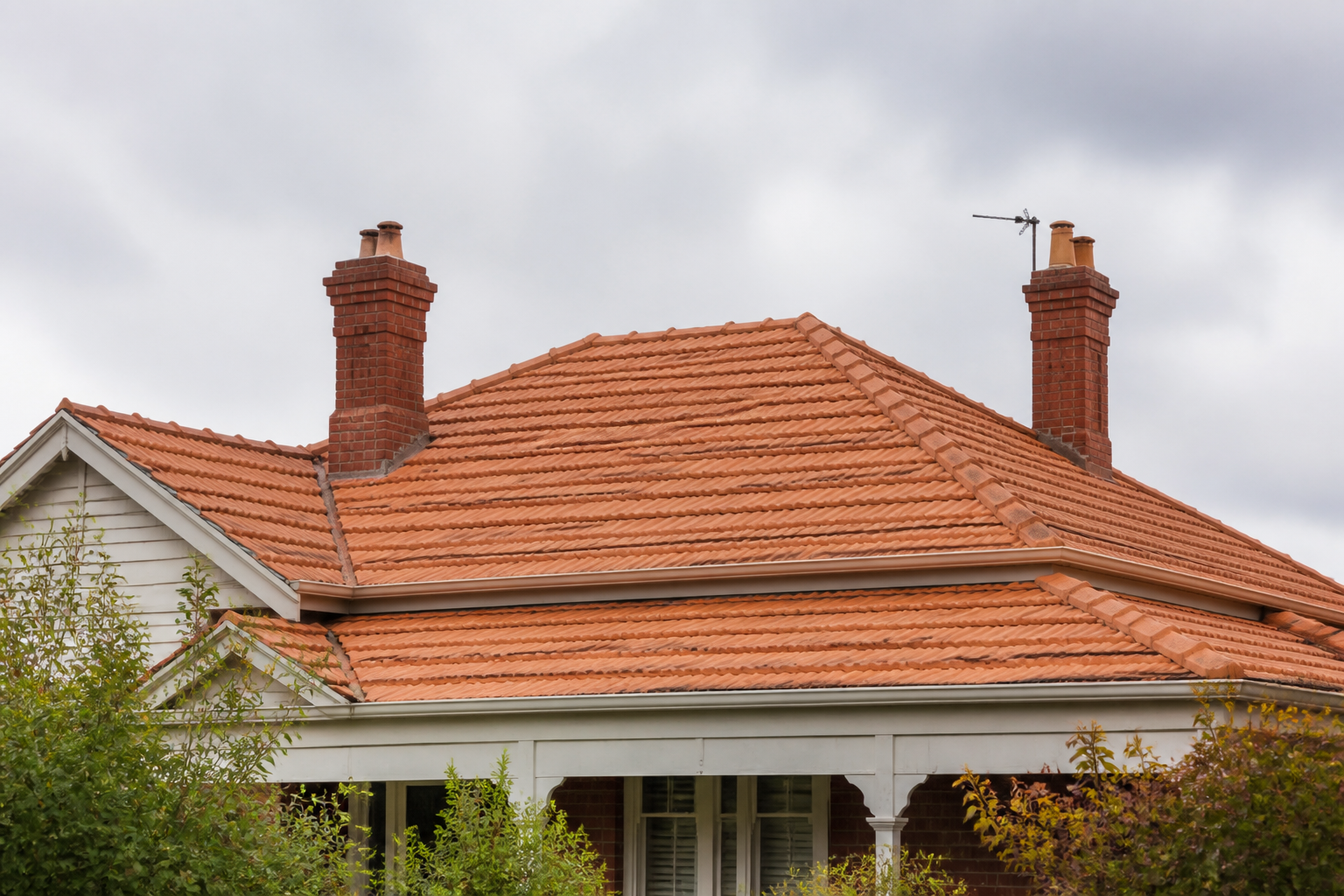
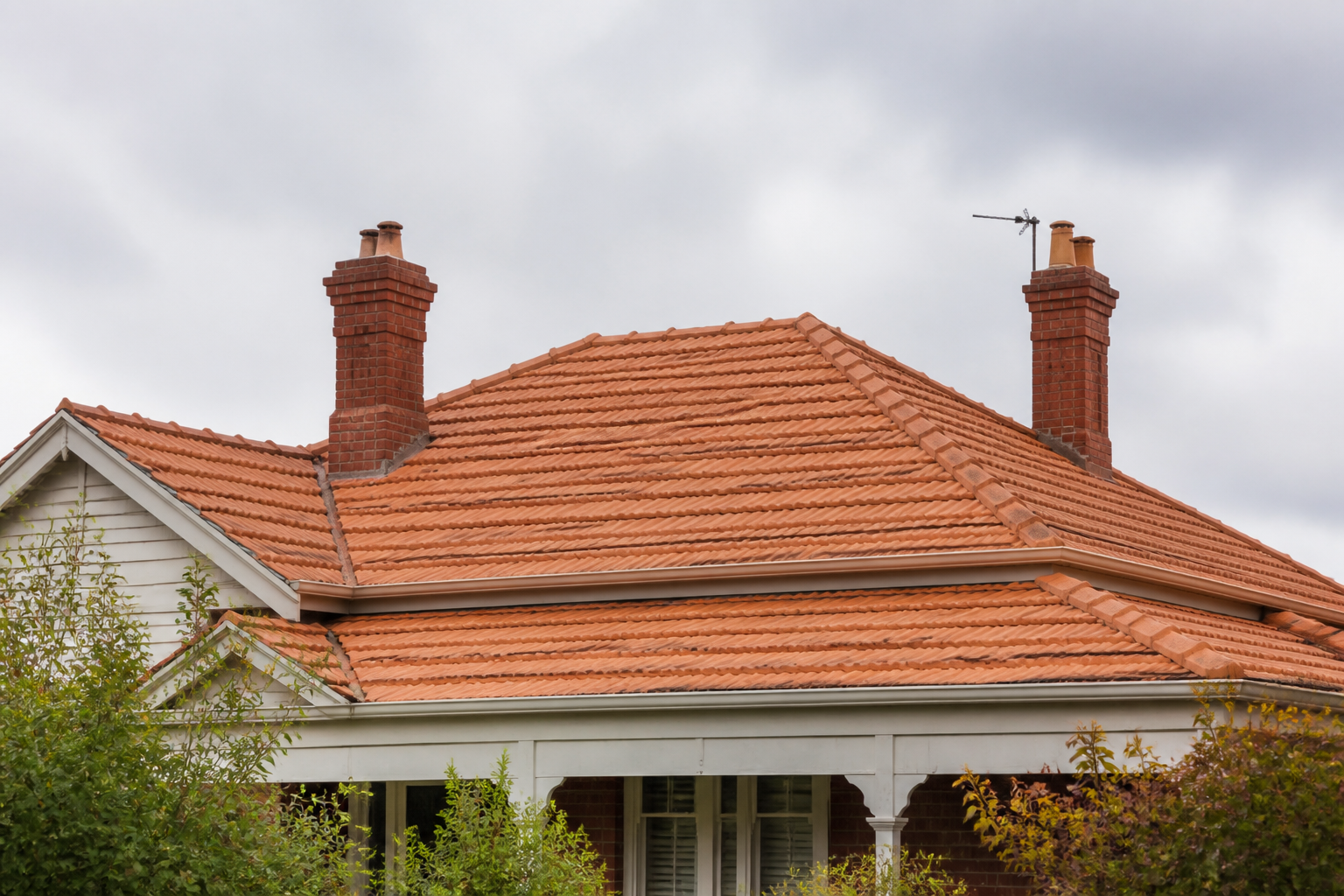
Sound glazed terracotta is another common “don’t paint” case. Glazed Federation and interwar tiles across Brunswick, Northcote, Malvern, Brighton and similar streets often only need broken tiles matched, ridges rebedded and valleys renewed. Coating a glazed face that was never meant to take paint can look wrong from the street, may conflict with a heritage overlay, and rarely improves weather performance the way rebedding does. Natural terracotta left uncoated after proper ridge and tile work is often the better restore.
Melbourne coating systems in plain language
Homeowners searching roof painting Melbourne usually need more than a colour chip. On a tiled restore the durable stack is preparation first, then a primer or sealer that locks dusty, porous concrete so the top coats can bond, then a protective acrylic membrane (or similar roof coating) rated for Melbourne UV and temperature swings. Skipping prep on chalky concrete is why some “paint jobs” peel within a couple of summers.
Chalky concrete from the 1960s–90s — common across Box Hill, Glen Waverley, Doncaster, Werribee estates and much of the middle and outer ring — sheds its factory surface into a fine powder. That powder must come off in the clean, and the sealer has to penetrate before colour coats go on. Terracotta is different again: many unglazed tiles take a sealer and coat if the owner wants a colour change; glazed tiles generally should not be painted at all. Ask which product system is proposed, how many coats, what the warranty covers, and whether ridges and valleys are in the same scope — not just which colour chart looks good on a phone.
Heritage overlays and paint or colour changes
Large parts of inner and middle Melbourne sit under heritage overlays — precincts across Yarra, Port Phillip, Boroondara, Stonnington, Merri-bek, Hobsons Bay and Melbourne itself. Like-for-like work (matching tiles, rebedding ridges, renewing flashings in a similar profile) is usually straightforward. Changing a street-visible roof colour, coating a roof that was never coated, or swapping tile for metal can need a planning permit. Your council decides; treat this as general guidance only.
Flag an overlay on the enquiry. That way the quote conversation stays on repairs and finishes that are likely to be allowed, instead of locking in a colour that later needs a permit amendment. If you are not sure whether an overlay applies, a quick check of your council’s planning maps before anyone books scaffold saves a rework.
Bushfire-fringe notes for restored tile roofs
On Melbourne’s foothill and fringe suburbs — parts of Eltham, Research, the Dandenong Ranges fringe, Whittlesea, Plenty and similar — Bushfire Attack Level (BAL) and Bushfire Management Overlay rules can affect how a roof is detailed. A restoration day is a practical moment to close the gaps embers exploit: ridge and hip lines bedded and pointed tight, valley junctions clear of leaf, gutter edges free of debris, and any open gaps under capping sealed as the scope allows.
Tile roofs generally perform well against ember attack when those junctions are tight and leaf is not sitting in the water path. This is general guidance only — your council and a BAL assessor confirm what applies to your block. Mention a bushfire-prone rating on the enquiry so the scope notes it.
Rainwater tanks, solar arrays and neighbour care on coating day
Many Melbourne homes feed a rainwater tank from the roof. Before high-pressure cleaning and coating, tank inlets should be isolated so wash-down, biocide residue and overspray do not enter drinking or garden water. After coats cure, the roof is flushed and the system cleared before reconnecting. Gardens you water from the tank, pets in the yard, and parked cars next door all need the same thought — overspray travels on a northerly.
Solar arrays and roof-mounted air-conditioners stay in place. Crews work around rails and condensers; expect a neat edge at panel lines rather than a full strip under the array unless panels are coming off for other reasons. Tell us about tanks, solar, HVAC and close neighbours when you enquire so isolation, drop sheets and timing are built into the quote rather than improvised on the day.
Aftercare and when to re-inspect
After a restore, the first storm season is the useful check: look for drips at ceilings, damp in the roof space, and whether gutters are carrying grit from any residual chalk. North and west pitches take the hardest UV and are where chalking returns first years later; leafy north-east and foothill roofs (Kew, Ivanhoe, Eltham, the Dandenong fringe) see moss return sooner if trees still overhang the pitches.
A light re-inspect a year on — or after any severe hail or wind event — catches small ridge or valley issues before they undo the coating work. Keeping gutters and valleys clear is the cheapest aftercare; blocked box gutters and valleys put water back under tiles no membrane can fix from above.
Decision map: clean vs restore vs repair vs replace
The honest boundary is simple. Moss, lichen and surface grime on sound tiles — start with roof cleaning. Porous, chalky concrete with sound battens and mostly intact tiles — restoration (clean, repair, rebed, coat). Broken tiles, rocking ridges, or no sarking under otherwise good terracotta — tiling-led work via roof tiling Melbourne, sometimes with restore coats only where they still make sense. Active leaks at valleys, flashings or boots — triage with roof repairs Melbourne and often roof plumbing. Tiles, battens and structure finished, or a switch to metal — roof replacement. Not sure where you sit? A roof inspection Melbourne with photos settles the path before you spend on the wrong scope.
Include your suburb, storeys, tile type if known, whether tanks or solar sit on the roof, heritage overlay if you know of one, and photos of chalking, moss, ridge gaps and any ceiling stains. Call 0485 008 178 or use the form above.

 Example job type